October 29, 2026
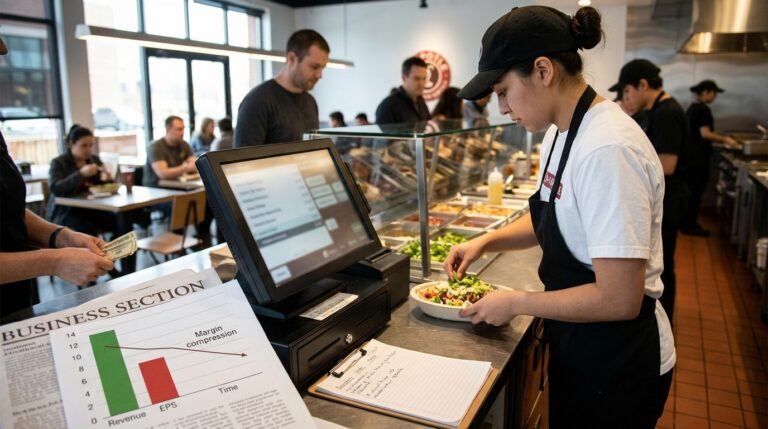
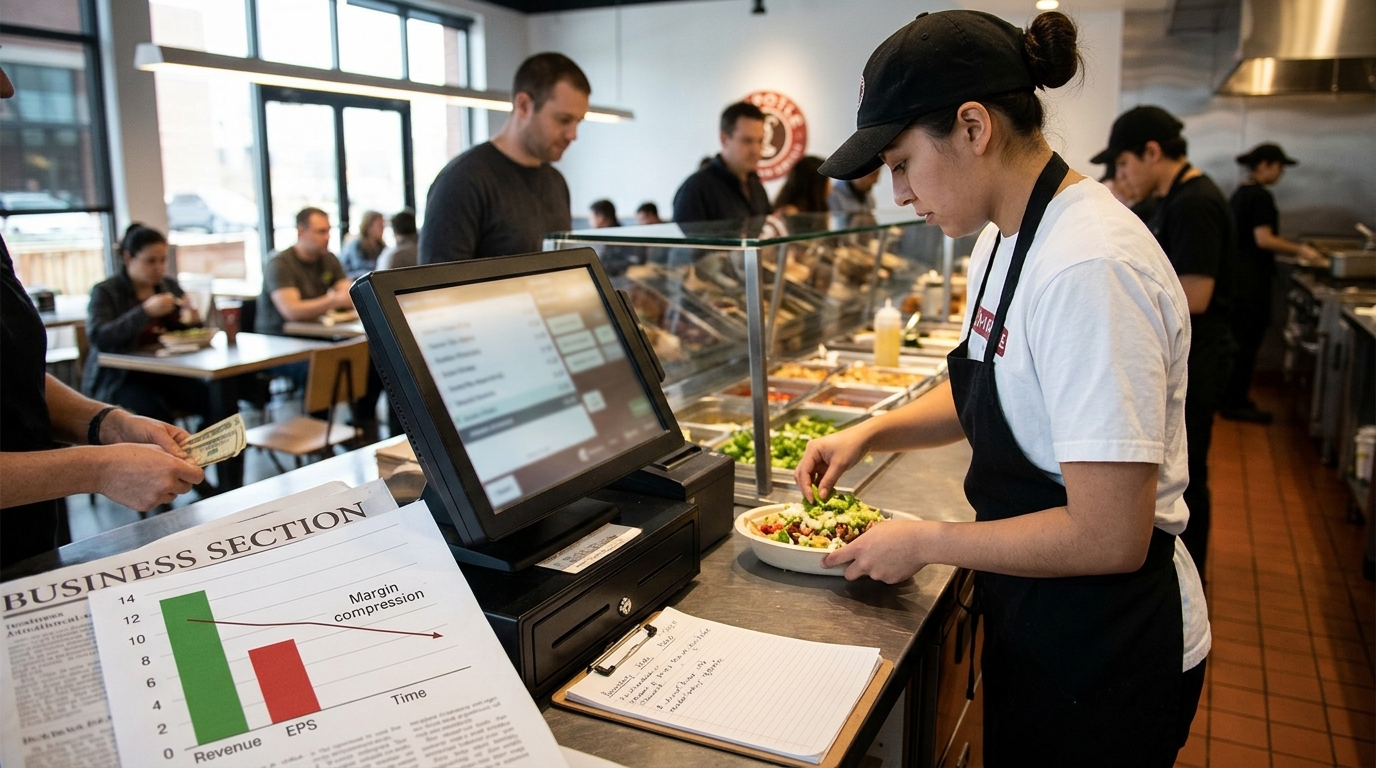
Bonus Content: Chipotle Beat Revenue. Its EPS Fell Anyway. Margin Math Runs the Show.
Hi,
In 1965, about 42% of American adults shared the same habit. By 2022, it was under 12%.
You can probably guess the habit. The industry that may be next is the surprise.
Along the way, the companies behind that first habit agreed to an estimated $206 billion in settlement payments.
The industry didn’t vanish. But the customers, the rules and the money all moved.
Now a similar kind of pressure may be building around another industry, one the world can’t live without.
Here’s the twist: people could quit that first habit. Nobody can quit pest control.
So if the pressure keeps building, the demand doesn’t disappear. It has to go somewhere.
Our research desk boiled the whole story down to a 60-second read. It starts with one question:
Chipotle Beat Revenue. Its EPS Fell Anyway. Margin Math Runs the Show.
Revenue beats are supposed to matter. At Chipotle right now, they matter less than what those revenues cost to produce.
Chipotle reported mixed third-quarter 2026 results, with adjusted earnings of $0.27 a share versus $0.29 a year earlier, while revenue rose 9.6% to $3.3 billion and slightly topped forecasts. The market decided the sales line was the point. Investors sent the stock up about 7% in after-hours trading to roughly $30.71.
That reaction is worth interrogating. A ~7% pop on an EPS miss is not a verdict on the quarter. It is a bet on the trajectory.
What the Numbers Actually Show
Operating margin came in at 13.7%, down from 15.9% in the same quarter last year. Chipotle also flagged ongoing cost pressure. On the earnings call, management said fourth-quarter cost of sales is expected around 30.5% and labor costs around 26%.
Consensus EPS has slipped 1.10% over 90 days and 13.47% over one year, with FY2026 EPS estimated at $1.14 versus $1.17 in FY2025. That is a year-over-year earnings decline at a company still trading on a growth premium.
The traffic picture is cleaner. Comparable restaurant sales increased 2.1%, with positive transactions in all three quarters of 2026. Digital sales were a record $1.3 billion, representing 38.8% of total sales, and loyalty reached a record 33% of sales. Those are structural gains, not promotional noise.
What Management Is Betting On
Management guided Q4 comparable sales to approximately 2%, with an exit rate of 3% to 4% for the year, supported by the brisket launch and marketing initiatives. The smoked brisket return is scheduled for November 5. That single limited-time item is the clearest near-term test of whether the exit-rate claim holds.
Management framed 2026 restaurant-level margins in the mid-23% range, including about 100 basis points of price-inflation dislocation, and called a mid-24% margin the 2027 baseline, assuming pricing offsets inflation and at least one point of transaction growth offsets new restaurant openings. That is a precise framework. It is also one that leaves little room for a second cyclospora scare or a consumer spending reversal.
Options Market Structure
Ahead of Wednesday’s report, options priced a move of plus or minus 7.51% for CMG. The realized after-hours move of roughly 7% landed almost exactly at that implied level, which means premium sellers collected near-zero edge and buyers of direction absorbed the vol crush. In early October, CMG carried an IV rank above 72 with earnings still three weeks out, a signal that the market had been building premium into the event for weeks. Post-earnings, that premium collapses, and ATM implied volatility was about 35.1% heading into the report.
For traders now navigating the post-earnings landscape, the structure has shifted. IV crush is complete. The next catalyst is Q4 comps confirmation, which will not arrive until February 2027. That long gap between now and the next data point changes which structures carry value.
Trade Framework
Bull case: If you believe the 3% to 4% comp exit rate materializes and the mid-24% margin baseline for 2027 holds, a defined-risk long position targeting analyst consensus around $42 reflects roughly 40% upside from the current level near $30. A call spread in the February or March expiration captures that thesis with contained downside.
Bear case: October trends have been described as softer by at least one firm following the quarter, and guidance was characterized as lighter than previously anticipated. If consumer spending compresses into year-end and the Q4 comp misses the 2% guide, the stock retests its 52-week low near $27. A put spread structures that outcome with defined risk.
Neutral case: The balance sheet remains strong, with about $1.0 billion in cash and no debt. Chipotle has repurchased roughly $1.4 billion of stock year-to-date in 2026, with $1.6 billion remaining under authorization. Selling a cash-secured put at a strike below $27 captures yield while the buyback program provides a partial floor.
Risk Factors
FY2027 EPS is estimated at $1.37, about 20% above FY2026, which is where the stock’s remaining premium lives. Any revision to that figure accelerates the multiple compression that has already taken CMG from $41 to $30 this year. The margin recovery story is real. It is also dependent on transaction growth hitting a threshold that has not yet been demonstrated at scale.
Checklist: Confirm Q4 comp trend via November sales data. Watch November 5 brisket relaunch traffic signals. Track sell-side commentary on October softness for signs of revision. Manage position size ahead of any macro consumer spending data. FY2027 margin framing in February is the fulcrum event.