October 11, 2026
Bonus Content: Factories Are Buying Heat, Not Fuel
I didn’t think this would raise so many eyebrows.
But on page 6 of The Retirement Trade, I break down the simple trade strategy that paid $1,160 in less than an hour on a popular tech ticker.
That’s more than some people make in a month!
So you can see why a lot of retirees or soon-to-be-retirees are turning to trading.
Hi I’m Dave Aquino. I spent 16 years at Vanguard managing $660 million for ultra-high net worth individuals. I’ve tested dozens of trade strategies during my career. But there’s 1 simple trade strategy that I think is picture-perfect for retirees.
Due to a unique twist, I’ve seen win rates as high as 9 out of 10 with this trade. And one of my students – Jim Hass – generated $6,702 in trading profits the very first month he used this strategy.
Obviously I’m not promising that you’ll do the same. But I’ll teach you the exact same method he used.
The only catch?
You must be available to place the trade at a very specific time in the morning.
I reveal the full strategy – and the exact time to place the trade – on page 5.
Complimentary Download: The Retirement Trade
To your success,
Dave Aquino
Basecamp Trading
P.S. The great thing about the retirement trade is that you don’t need to be chained to your desk all day. Just 1 simple trade… at exactly this time… and you’re done for the day.
Factories Are Buying Heat, Not Fuel
The question heavy industry has been circling for three years is not whether thermal storage works. It works. The question is whether it can undercut a gas boiler on a delivered-heat basis, in a facility that runs seven days a week and cannot afford downtime. In 2026, the answer is arriving in the form of real commissioning announcements, real offtake agreements, and real cost figures.
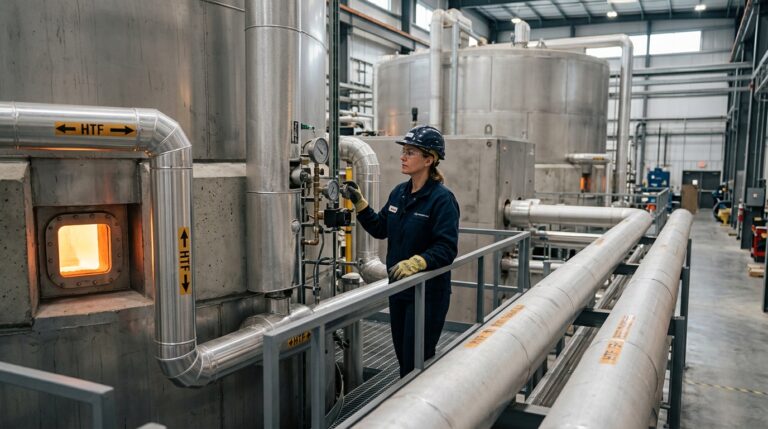
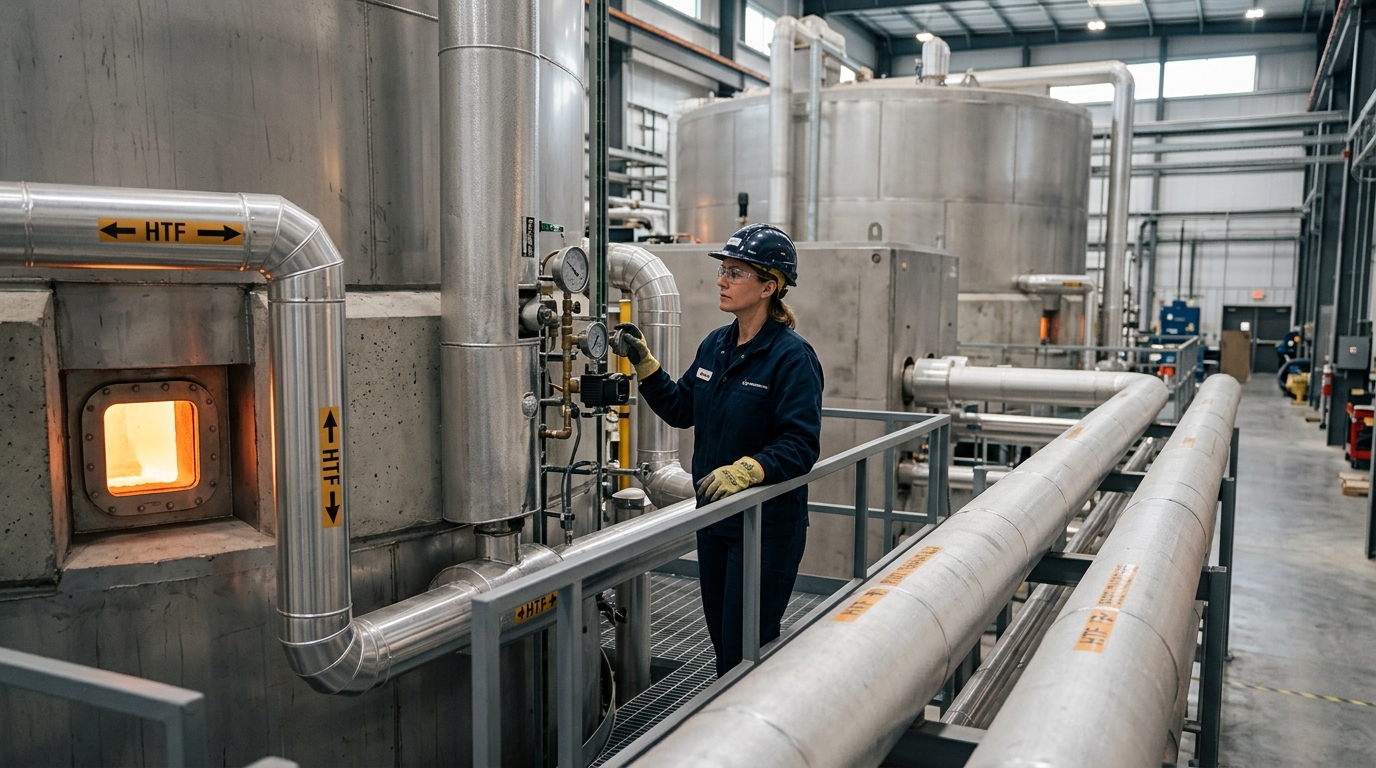
The clearest data point came out of South Dakota in May. Antora Energy and POET began commissioning a 5 gigawatt-hour, multi-day thermal energy storage system at POET’s Big Stone City bioprocessing facility. The project converts cheap wind energy into steam the plant needs to produce ethanol, displacing some of the facility’s reliance on steam supplied from a coal power plant next door. Antora’s thermal batteries store low-cost electricity as heat in insulated blocks of solid carbon, delivering 50 MW around the clock. The offtaker’s upfront capital outlay: zero. The project is financed entirely at the asset level, with POET paying for delivered steam under a long-term heat offtake agreement. That contract structure is as significant as the technology itself.
What the Cost Numbers Actually Say
The Antora-POET project has been positioned as an early real-world data point for a GWh-scale thermal battery, with industry reporting that it targets a levelized cost of storage between $0.05 and $0.10 per kWh. For comparison, Canary Media reported that Rondo Energy’s CEO estimated its heat batteries can provide energy storage “well within” $20 per megawatt-hour, about one-seventh the cost of lithium-ion battery packs priced near $140 per megawatt-hour, citing BloombergNEF. These are not identical systems doing identical jobs, but the directional message is consistent: thermal storage aimed at industrial heat is structurally cheaper than electrochemical storage because it never converts back to electrons. Heat in, heat out, with reported efficiency in the high-90% range.
Rondo says its refractory-brick systems reach about 1,500 degrees Celsius with standby heat loss of less than one percent per day, and it has reported round-trip efficiency above 97% while delivering 24-hour steam. The molten-metal approach taken by MIT spinout Fourth Power goes further on temperature. MIT has described the design this way: where many thermal battery systems move high-temperature gas or molten salt through metal pipes, Fourth Power uses molten metal to transport heat, which is stored in carbon bricks. Fourth Power has described its technology as long-duration storage, but public materials generally frame the discharge duration as application-dependent rather than a fixed 10-to-100-hour range.
Where the Bottlenecks Remain
Two constraints slow deployment. The first is materials. Freeze protection for molten nitrate salts, which melt around 220 to 240 degrees Celsius, requires continuous heat tracing and can create meaningful parasitic consumption in practice. High-temperature corrosion remains a design constraint for salt systems, particularly as temperatures rise, which can push developers toward more specialized alloys and higher capital cost. The second is tariff access. The challenge is getting utilities, regulators, and energy-market operators to allow industrial customers access to low or negative wholesale prices. Today, most industrial sites buy electricity at retail rates that do not pass through wholesale fluctuations. Antora’s workaround at Big Stone, a customized tariff rider developed with local utility Otter Tail Power that rewards charging during surplus renewable production, is a template the company says it is replicating across other utility territories.
The broader market is moving regardless. One industry report estimates the global molten salt thermal energy storage market at $2.44 billion in 2026, projecting $4.76 billion by 2033. That figure covers only molten-salt systems and excludes the carbon-block and brick-based alternatives now operating at commercial scale. The more relevant metric for heavy industrial operators is simpler: for the right sites with the right power pricing, the gas boiler is no longer the default cheapest way to make steam. That conclusion, unimaginable three years ago, is now supported by systems operating in the field.