Starbucks closes its fiscal year on Sunday. Four consecutive quarters of comparable sales growth, a freshly raised dividend, and a plan to open hundreds of new locations paint a compelling recovery picture. Look closer, and the combination of aggressive expansion alongside deliberate pruning reveals just how much the turnaround still has left to prove.
The Store Math Is More Complicated Than It Looks
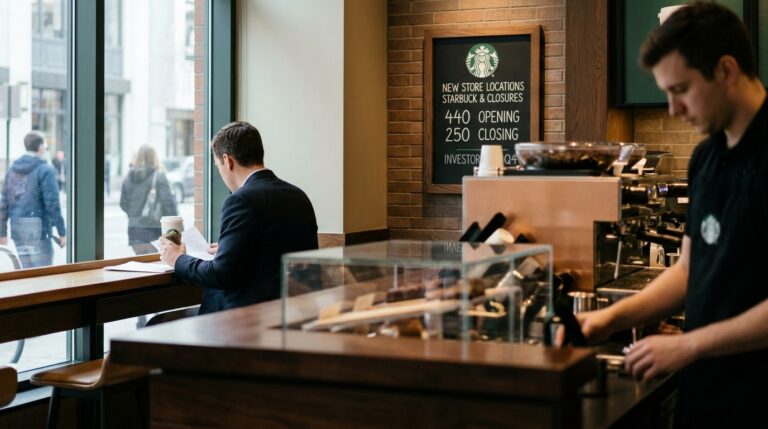
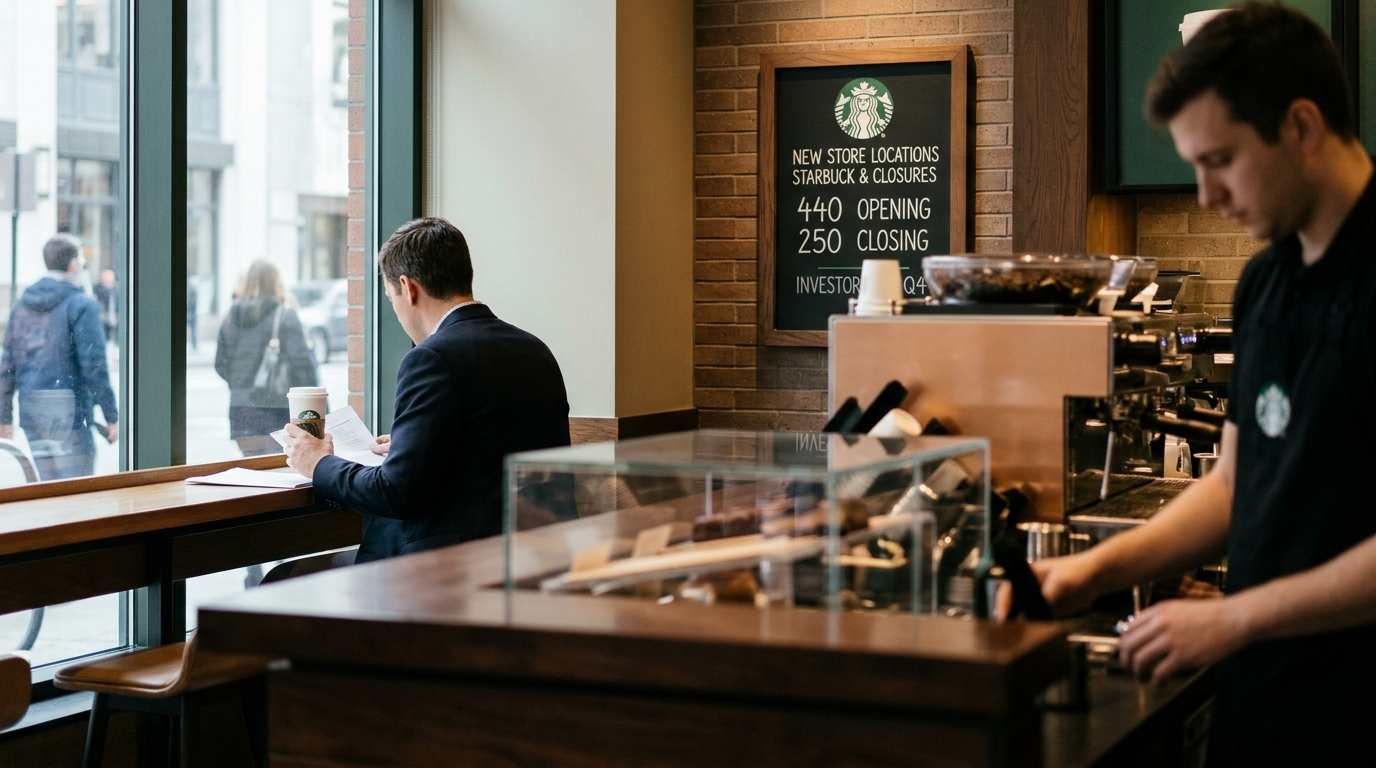
Starbucks will close about 250 North American coffeehouses and now expects about 440 net new global openings in fiscal 2026, down from the 600 to 650 it maintained in July when it raised its broader fiscal 2026 outlook. That revision came fast. On the Q3 fiscal 2026 earnings call, CEO Brian Niccol told investors Starbucks was raising its outlook, with 600 to 650 net new coffeehouses still on the plan. On September 24, a filing said about 250 North American locations would close, with about $300 million in restructuring charges, $200 million of it cash.
In total, the closures amount to about 1% of Starbucks’ North American footprint of more than 18,000 locations. That fraction sounds surgical. But the closures represent about 2.2% of Starbucks’ 11,149 company-operated North American locations when counted against only the stores the company actually runs. The distinction matters because it is company-operated stores, not licensed ones, that drive the margin story management is selling.
The affected locations either did not “deliver the experience we want for customers and partners” or were not financially viable, the company said. The pipeline replacing them is genuine: Starbucks has reported two straight quarters of margin expansion, and it plans at least 1,500 store uplifts by the end of fiscal 2026. Those renovated cafés are the operational foundation the new openings need to stand on.
What the Dividend Signals
On October 7, 2026, Starbucks announced a quarterly dividend increase to $0.63 per share, marking a 1.6% rise from the prior $0.62 dividend. That raises the payout for the 16th consecutive year. Starbucks first initiated its dividend program in 2010 with a quarterly payout of $0.05 per share and has since grown its dividend at a compound annual growth rate of approximately 17%.
The streak is admirable. The coverage is tight. The new $2.52 annualized dividend equates to an estimated payout ratio near 97% of Starbucks’ fiscal 2026 non-GAAP earnings guidance midpoint. Management expects non-GAAP earnings per share in a range of $2.55 to $2.65 for fiscal 2026. Raising a dividend to $2.52 annually against guidance of $2.55 at the low end leaves almost no cushion if Thursday’s Q4 report disappoints.
Analysts expect $3.15 in earnings per share next year, implying a future payout ratio of about 80%. That projection is the whole argument for the dividend. It requires fiscal 2027 earnings to grow roughly 21% from where the midpoint of this year’s guidance sits. That is achievable only if the new stores earn their keep, the closed ones stop dragging margins, and traffic gains hold at the pace Q3 demonstrated.
The Q4 Bar and What Comes After
The consensus EPS forecast for Q4 is $0.71, against last year’s $0.52. Global comparable store sales rose 7.9% in Q3, and U.S. comparable store sales rose 7.9%, driven by a 4.2% increase in comparable transactions and a 3.6% increase in average ticket. Sustaining that transaction momentum through a period of store closures and renovation disruption is Thursday’s real test.
Buyers now pay about 58 times Starbucks’ earnings over the twelve months to June 2026, well above the stock’s average near 40 at its last 12 fiscal quarter ends. That premium prices in a clean fiscal 2027 bar. If Niccol sets guidance that implies meaningful margin expansion while the $300 million restructuring bill runs through the income statement, the market will likely reward the discipline. If Thursday’s commentary hedges on unit economics or traffic trends, the multiple has room to compress quickly.
The Wealth-Building Perspective
For long-term shareholders, the combination of roughly 440 planned net new stores, 250 closures, a 16-year dividend growth streak, and a payout that consumes nearly all of current earnings describes a company in mid-transformation, not a finished product. Some Wall Street forecasts map out a move in Starbucks’ net profit margin from about 5% recently to roughly 11% over the next three years. That is the destination the expansion plan and the renovation program are supposed to reach.
Thursday’s report will show whether management can set a credible fiscal 2027 target while absorbing the costs of getting the portfolio right. Investors who already own SBUX should treat this earnings call as a progress review, not a catalyst. Those considering entry should weigh a generous multiple against a brand genuinely rebuilding customer frequency, one cup at a time.
Daily Wealth Takeaway: A dividend raised through restructuring charges and tight payout coverage is a statement of confidence, not a guarantee. The real signal arrives when earnings grow enough to make that confidence look conservative.