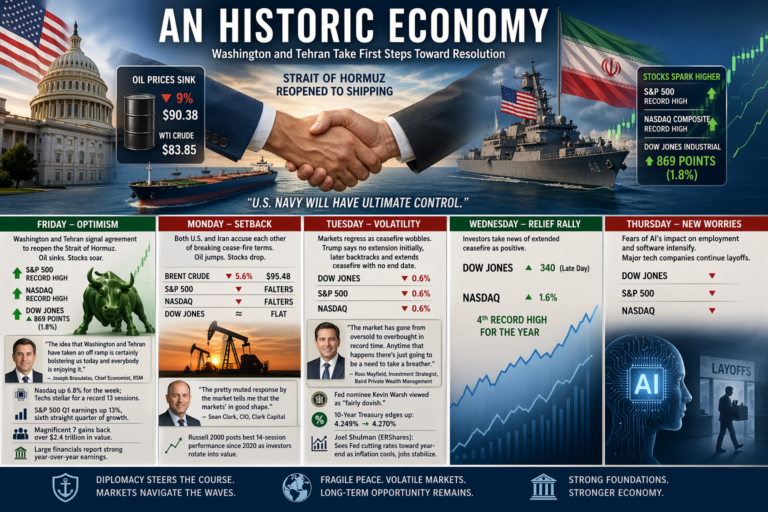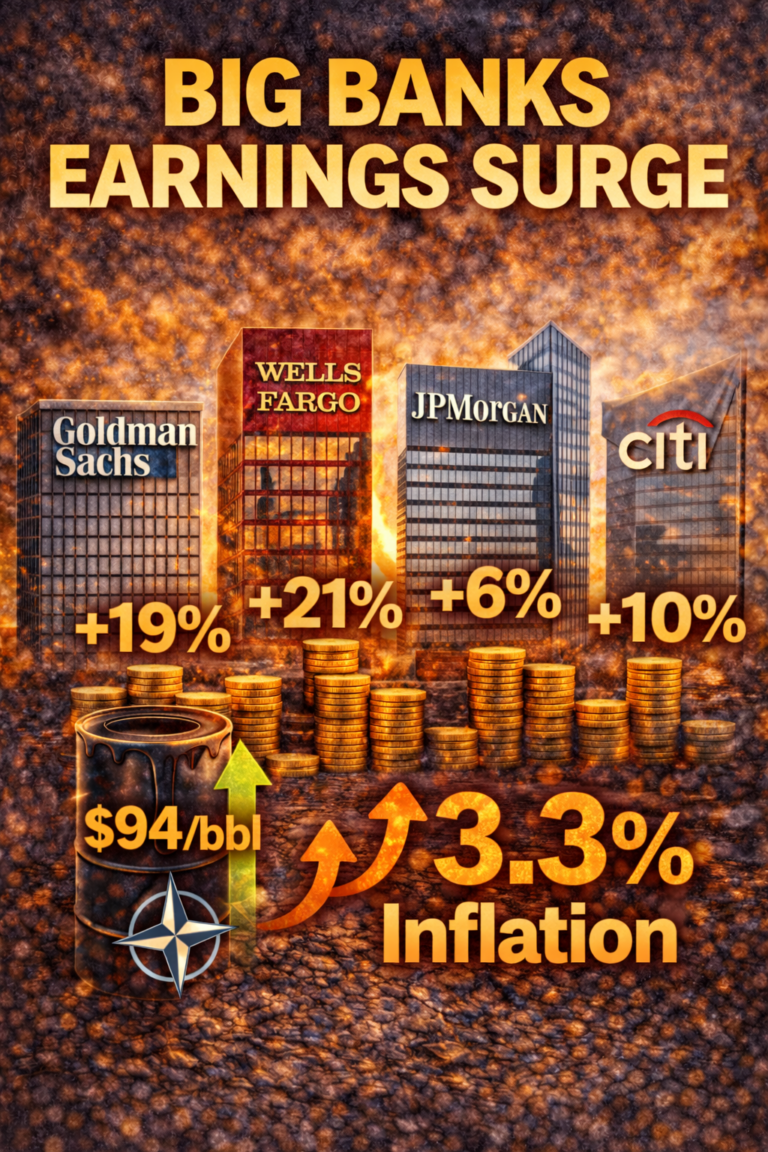
Oil continued to rule the markets and sway economies around the world, up 36% this past week. West Texas Intermediate Crude soared all week, finishing Friday at $90.00 a barrel. Pump prices are jumping, nearing the $4.00 a gallon level, with diesel even more. Iran’s decision to close the Straits of Hormuz jogged oil higher and set the stage for deeper military operations in the area. Indexes lost again, down for the week, with the Dow Jones Industrial Average off 3%, losing 453 points, while the S&P 500 slipped 2%. The heavy-tech Nasdaq dropped 1.2%. Continuing concerns of AI’s far reaching disruptions to nudge the software industry and effects on high-tech companies clouds previously high growth sectors. Many analysts and strategists have noted that rotation has picked up with significant trading in the bond market and value-proven stocks in the smaller Russell 2000 index. The 10-year Treasury, a good barometer of ‘borrowing costs, finished at 4.131%.
The Labor Department released its Jobs Report on Friday that 92,000 jobs were lost in February, contrary to January’s gain of 126,000 jobs added. The Wall Street Journal’s poll of economists had estimated the job-lost number to near 50,000. “This is about a labor market that is so soft that it can not withstand a strike of 30,000 healthcare workers, because no one else is hiring,” said Omar Sharif, Inflation Insights Economist. The unemployment rate edged up slightly to 4.4%. A major technology company recently announced a lay-off of 4,000 higher-tech employees in preparation for the institution of sophisticated Artificial Intelligence technology in February, with signs more wholesale layoffs are coming. As AI becomes more involved with companies, reduction of ‘staffing needs’ appears greater.
Oil was again the culprit on opening Monday, however this time in an unbelievable ‘reversal.’ Late Sunday, early Monday oil soared, reaching $119.00 a barrel briefly, then in a remarkable turnaround fell quickly back to the $86.00 to $87.00 levels. President Trump’s ‘earth-shattering’ comment: “I think the war is very complete,” gave investors and traders solace, as the oil markets retracted. “I’ve never seen anything like this in my 30-year career,” said Rob Thimmel, portfolio manager at energy investment firm Tortoise Capital. “It’s hard to gauge when this is going to end. We do have plenty of oil in the world. We just need to keep it moving.” The Dow Jones Industrial Average, after the major swings all day Monday closed up 239 points, as technology stocks were in focus by aggressive investors looking for bargains and long term growth. While the G-7 nations have heavy concerns on oil usage requirements and reserves, the U.S. is nearly non dependent on middle east and foreign oil. It is however the worldwide protector of the flow of oil. “The U.S. Strategic Petroleum Reserve contains 415 million barrels of oil according to the Energy Information Administration,” effectively ensuring the U.S. and many countries with questionable reserves, a flow of U.S. oil. U.S. oil production is at an all time peak, assuring our country with seamless oil flow.
Oil continued to fall Tuesday after Energy Secretary Chris Wright said: “The U.S. Navy successfully escorted an oil tanker through the Strait of Hormuz to ensure oil remains flowing to global markets.” Markets reacted, with the indexes falling slightly, then recovering after the Energy Department retracted the Chris Wright release, as oil dipped again. The Dow Jones Industrial Average has endured a battering since the start of the U.S.-Israeli/Iranian conflict began. Wednesday’s Dow Jones closed at 47417, while Thursday’s close deepened to 46677, off 739 points lower, well below the start of the year.
RUMBLINGS ON THE STREET
Ken Mahoney, chief executive of Mahoney Investment Asset Management, WSJ – “It literally sets up a perfect storm. Here we are just two months into the year, getting hit from all sides.”
Mathew Bartlett, first term Trump appointee to the State Department, WSJ – “The longer this goes on, the worse it is politically, full stop. Trump is zeroing in on international affairs at the expense of domestic political strategy, adding: ‘America first has now turned into America strikes first.’“
TD Securities, told clients, WSJ – “The stagflationary tone in markets is broadening. But the magnitude of moves has remained.”
About the Author