June 16, 2026
One Order. $400 Million. The Largest in Company History. (
Featured: The Post-Earnings Crash in PLAY
Hey Friend,
A small industrial company just secured its largest order in history.
$400 million.
But it’s what the order is for that gives the game away.
“Behind-the-meter on-site generation.”
That means power built directly on a customer’s property – bypassing the public utility entirely.
It’s the exact architecture you build when you can’t wait for a utility to upgrade. When you’ve been running temporary turbines and need a permanent solution. Fast.
Sound familiar?
New orders surged 97%. Then came multiple mega-orders over $75 million. Now a $400 million record. Total backlog: $1.8 billion.
Dylan Jovine has the name.
See the company behind the $400 million order >>
“The Buck Stops Here,”
Kelly Maguire
Behind the Markets
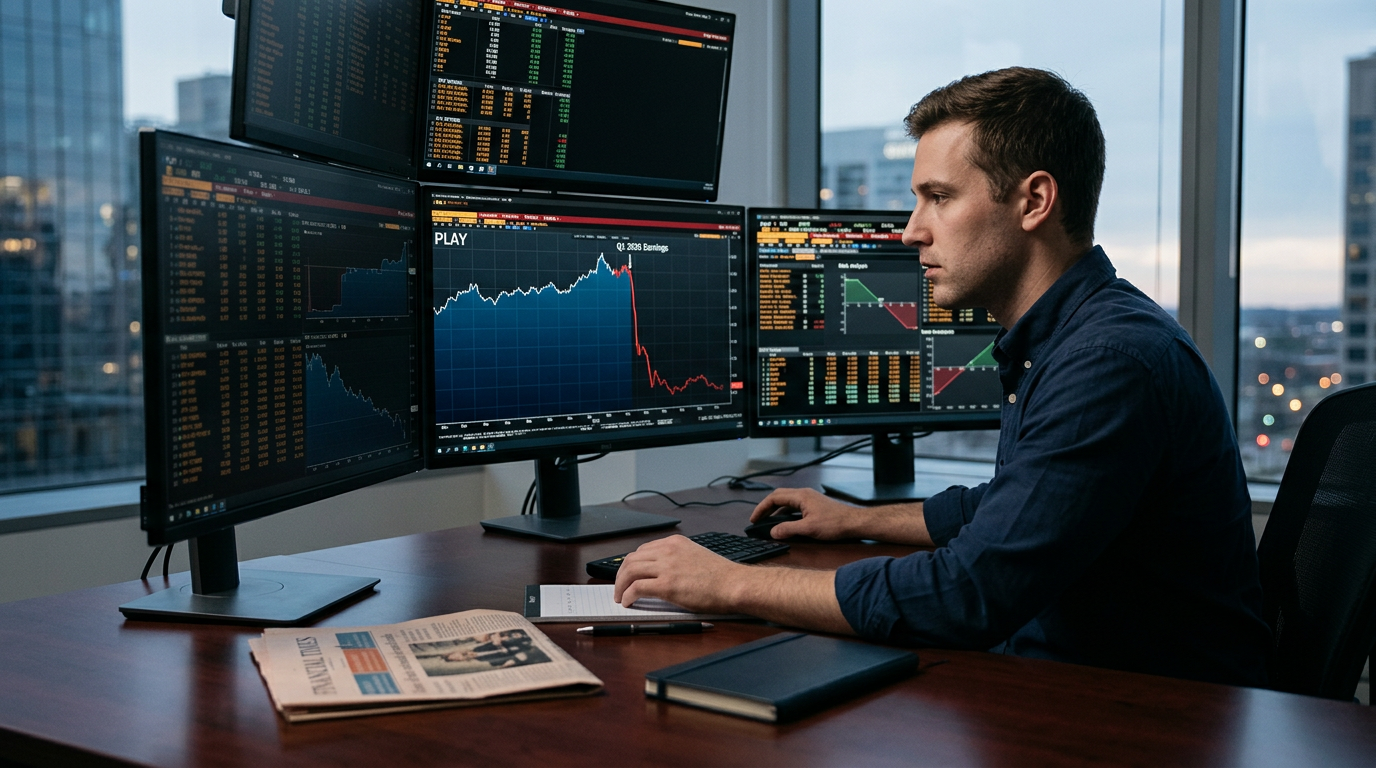
The Post-Earnings Crash in PLAY
Markets don’t need a recession to punish a stock. They only need a quarter where expectations were leaning the wrong way.
Dave & Buster’s Entertainment (PLAY) delivered that kind of moment. In its first quarter of fiscal 2026 (ended May 5, 2026), the company reported diluted EPS of $0.16 (adjusted EPS $0.22). The headline problem was the gap versus what many on the Street were braced for: roughly $0.60 in EPS expectations going into the release. The stock responded the way stocks usually do when the earnings math breaks sharply in one direction, dropping about 14% in premarket trading as the news hit.
That’s the theme behind today’s “post-earnings crash” options play: when the move is already violent, traders often stop trying to be heroes with unlimited-risk positions and instead focus on defined-risk structures that can still pay if the weakness persists.
Pentagon Just Signed $26 Billion With This Company – And You Can Get Pre-IPO Exposure
Led by a man many are calling “the next Elon Musk”… his company is already working with every branch of the U.S. military.
What most people don’t realize is that you can still get pre-IPO exposure – for around $20.
A trusted VC just revealed how.
Click here to see the secret ticker – no email or credit card required.
Here’s where it gets interesting. After a shock like this, implied volatility can still stay elevated for a window, but it’s also fighting the natural tendency to fall once the event is over. That tension is why spreads keep showing up. A straightforward example is a bear put spread: buying a put (often slightly out of the money) and selling a lower-strike put in the same expiration. The bought put gives downside exposure; the sold put helps pay for it and reduces sensitivity to volatility falling after earnings.
Options volume tends to surge in these moments because the stock has shifted from “slow grind” behavior to “high-magnitude” behavior. In plain English: traders are paying for convexity, but they want boundaries. Put spreads provide that. You cap the maximum gain, yes, but you also lower cost and define risk up front, which matters when prices are moving quickly and liquidity can get messy.
What I’d watch next is simple: whether the stock keeps making lower lows after the open, and whether put activity stays concentrated in near-dated expirations (momentum chase) or rolls out in time (more strategic positioning). The first tells you about urgency. The second tells you about conviction.
Worth a look: scan the chain for where spreads are clustering, then compare that to key recent support levels. If downside pressure stays real, that’s where the next decisions get forced.