

July 25, 2026
The AVGO Options Signal
Samsung’s $200B MOU changed the risk map.
First a note from Brownstone Research
Do you hold any of these AI stocks?
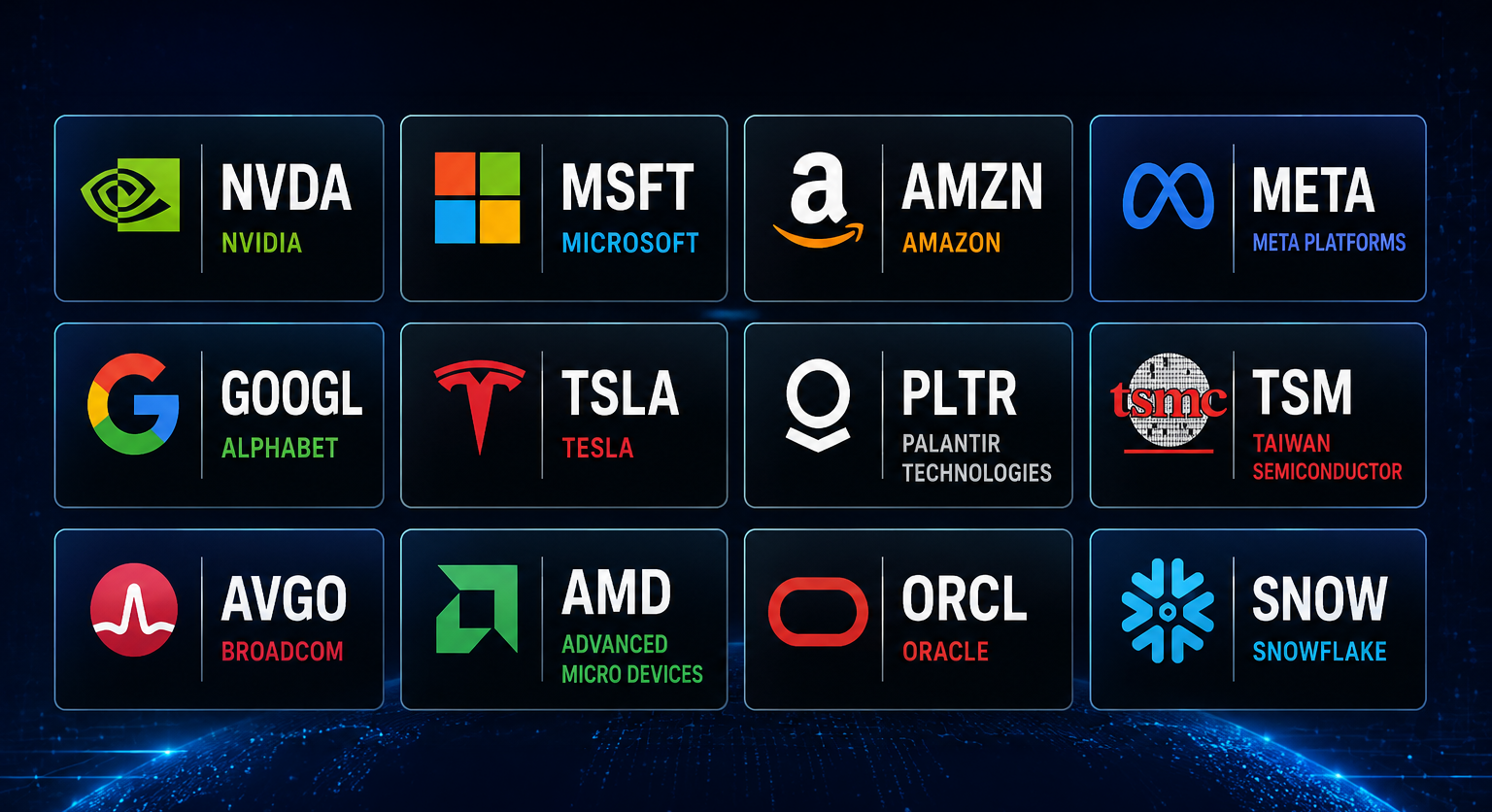
Wall Street insider Jason Bodner – the man who called Nvidia at $4.50 – says today’s AI stocks are about to hit a wall.
And a completely different group of AI firms… names Wall Street is starting to ignore… are about to take off.
This has nothing to do with SpaceX…
A new chatbot…
Autonomous robots…
Or anything you’re likely hearing about.
It has to do with a brand-new “light-speed” device turning AI as we know it into “Accelerated AI”…
Making it 100 times faster…
And 100 times more energy efficient – right here, on Earth.
Already, some of the biggest tech investors like Elon Musk, Mark Zuckerberg, Cathie Wood, and Bill Gates are moving money into it.
Just to name a few…
They’re all moving money to prepare for what’s coming.
But you won’t hear anything about it in the mainstream news…
In fact, TV pundits spent most of this past year talking about AI worries and its “existential risk” to jobs…
Or arguing whether we’re in an AI bubble and when it would pop…
That’s why most Americans won’t see it coming until it’s too late.
Don’t be one of them…
Because if you’re holding the wrong AI stocks when “Accelerated AI” goes mainstream…
You could spend the next decade just trying to claw back to even…
But if you make the one move Jason reveals in this urgent video message…
The next 12 to 24 months could hand you bigger gains than the entire AI boom of the last three years.
Click here to hear the full story and get ahead of the crowd.
But hurry, because this opportunity won’t stay hidden much longer.
We have so much to look forward to,
Jeff Brown
Founder & CEO, Brownstone Research
P.S. Jason also shares details on 10 popular AI stocks he says you must dump before this shift goes mainstream. Names sitting in millions of 401(k)s, IRAs, and brokerage accounts. Click here to see if yours made the list.

The Signal
When a headline hits, the stock market reacts. When expectations shift, the options market reacts first and it reacts in the details: where volume clusters, how open interest migrates, and whether implied volatility lifts or stays stubbornly muted.
That’s the lens for Broadcom (AVGO) after Samsung Electronics and Broadcom announced a memorandum of understanding on July 25, 2026, expanding collaboration across memory and foundry technologies. Samsung said the collaboration is expected to be estimated at more than $200 billion over the next five years through 2030. It includes memory supply, including HBM, and foundry collaboration supporting next-generation AI infrastructure. The key point for options traders is simple: this is not a one-quarter demand headline. It is a multi-year supply visibility event, and that tends to change how downside is hedged and how upside is expressed.
Why It Matters
Broadcom is not being valued like a normal semiconductor company right now. It is being valued like an AI infrastructure toll collector. And the market’s core anxiety has been less about end-demand and more about execution at scale: supply, packaging, and the ability to keep shipping product into an environment where high bandwidth memory has become a bottleneck.
Broadcom itself put hard numbers on the AI ramp in its Q2 fiscal 2026 release (quarter ended May 3, 2026): AI semiconductor revenue of $10.8 billion grew 143% year over year, and the company guided Q3 AI semiconductor revenue to $16.0 billion, which it described as over 200% year-over-year growth. Those numbers are the reason the stock trades the way it does. The Samsung MOU speaks directly to the operational risk embedded inside those numbers, and that is why it should show up in options positioning.
Here’s where I get skeptical, in a useful way. A $200B+ estimate tied to an MOU can be both important and easy for the market to misprice in the short run. Options traders care less about the press release and more about whether volatility is being paid for, or sold, around the next decision point.
Nasdaq Ticker Reserved
They’ve reserved the NASDAQ ticker FASF. They just broke ground on their $850M flagship coal reformation facility in West Virginia. Frontieras is hitting massive milestones in very little time. This positions the company for potential valuation impact. Final weeks to become an early-stage shareholder.
Join 12K+ people and invest in Frontieras at $9.01/share by 8/6.
Disclosure: This is a paid advertisement for Frontieras’s Regulation A offering. Please read the offering circular at invest.frontieras.com
The Company Behind the Signal
Samsung’s side of the story matters because it affects how credible the supply promise is. Samsung’s own Q2 2026 earnings guidance (released July 2026) called for consolidated sales of about 171 trillion KRW and operating profit of about 89.4 trillion KRW. That is the cash engine funding the capex and the technology ramps.
Broadcom’s side matters because AVGO is increasingly a volatility story, not just a fundamentals story. When you have a company explicitly pointing to $16.0 billion in AI semiconductor revenue in a single quarter, the market tends to price a wide range of outcomes around every new data point: earnings, customer wins, supply constraints, and any hint that the ramp is hitting friction.
The Samsung MOU is essentially a supply-chain de-risking headline. If you believe the market was already leaning anxious on supply, you’d expect to see some combination of: downside put demand cooling, call demand extending out in time, or implied volatility shifting higher into a near-term catalyst window because participants expect a repricing of expectation.
Market Expectations (What Options Are Pricing)
This is the section where I would normally drop exact implied moves, IV rank, and term structure shifts. But I’m not going to invent numbers, and the sources available publicly today do not provide a clean, verifiable readout for AVGO’s current IV rank, IV percentile, skew shifts, or dealer gamma exposure in a way that meets publishable accuracy standards.
So instead, we anchor on what we can verify and what you can observe in real time Monday:
- Does front-week IV lift relative to back-week IV? If it does, the market is paying for near-term movement tied to the headline and follow-on commentary.
- Does put demand migrate to lower strikes, or does it flatten? Flattening put demand can signal reduced tail-hedging urgency.
- Do call strikes above the recent range begin to build open interest? That can be a sign of upside positioning rather than one-day speculation.
- Does realized volatility stay hot while implied stays muted? That mismatch is where asymmetric structures can make sense, but only if the catalyst calendar supports it.
One concrete reference point: a July options-focused report highlighted a sizable AVGO put purchase at the $370 strike (dated July 2026), framing it as hedging or a downside bet. You do not need that exact trade to repeat for it to matter. What matters is whether that behavior persists after the Samsung MOU or starts to reverse.
The 7-point checklist that saves bad trades
You can grab my Smart Trade Options Checklist free today – normally $29.97.
It’s a one-page filter. Seven checks. Run it before you place any options trade and you’ll catch the bad ones before they cost you.
Print it. Keep it next to your screen. Use it on every trade.
Download your free copy right here
Heads up: that link expires soon.
Strategic Considerations
This is not about “bullish” or “bearish.” It’s about whether the market is overpaying or underpaying for movement after a visibility event.
If AVGO opens strong and implied volatility expands at the same time, that is the market paying up for momentum continuation. In that environment, defined-risk call spreads can align better than outright long calls because you are often buying expensive premium. If the stock gaps and IV does not lift, that is a different message: the market may be treating this as “known information” or “long-dated relevance,” which is a common outcome with MOUs.
If AVGO opens flat but skew steepens and puts bid up, that would tell you something else entirely: the headline did not reduce concern. It may even have concentrated it into near-term event risk, where participants want protection but are not willing to chase the stock higher.
For traders who expect AVGO to stay range-bound while the market digests the announcement, neutral premium-selling structures can be considered, but only when liquidity is deep, bid-ask spreads are tight, and you can define risk clearly. The moment IV starts expanding, those strategies behave very differently.
On Samsung itself, U.S.-listed access is messy for most traders. The cleaner way most U.S. options traders will express this theme is via AVGO, and indirectly via U.S. semiconductor baskets. That’s not perfect, but it’s tradable.
What to Watch
There are two time horizons here, and mixing them up is how traders get chopped.
Near-term (next 1 to 5 sessions): Watch the Monday reaction and, more importantly, the options market response to that reaction. If you see call open interest growing above recent resistance areas and put demand easing at key downside strikes, that is an expectations shift. If you see put demand firming while the stock fails to hold early strength, the MOU may be treated as long-dated and not a near-term driver.
Event calendar: Samsung’s full Q2 2026 results are expected July 30, 2026, following its guidance release. Broadcom’s next major confirmation point is whether it reiterates or increases the AI ramp commentary that drove the $16.0 billion Q3 AI semiconductor revenue guide. Options will usually begin pricing those windows before the headline hits.
Practical checklist for Monday:
- AVGO: does implied volatility rise with price, or does it lag?
- AVGO: do you see repeat demand for downside puts near $370, or does that flow cool?
- AVGO: does open interest build above the recent range, suggesting positioning for a breakout?
- Samsung headline follow-through: do other supply-chain names show synchronized options activity, or is it isolated?
The cleanest read is not the stock candle. It’s whether the options market starts treating this as a near-term volatility event or as a long-dated de-risking story. That distinction shows up fast, usually within a session or two.
A Small Gold Market “Loophole”
There’s a little-known quirk in how certain gold trades behave… Especially when the market first opens. It creates moves that are often larger – and faster – than expected.
Not because of news… But because of how the gold market is structured. Most traders never notice it. And even fewer know how to use it. But once you see it, it’s surprisingly straightforward. A new report explains how this “loophole” works – and how it shows up in real time.