

July 26, 2026
Amazon’s AI image label rule
A policy tweak that can ripple into seller risk and AMZN volatility.
First a note from Mode Mobile
Breaking news:
Apple just made smartphones even more expensive, raising the price on most of their products by $200 or more.
Consumers are paying more than ever for technology that gives them nothing back.
More expensive devices. Higher upgrade costs. Still no way for users to share in the value their phones create.
Mode Mobile is building the opposite model.
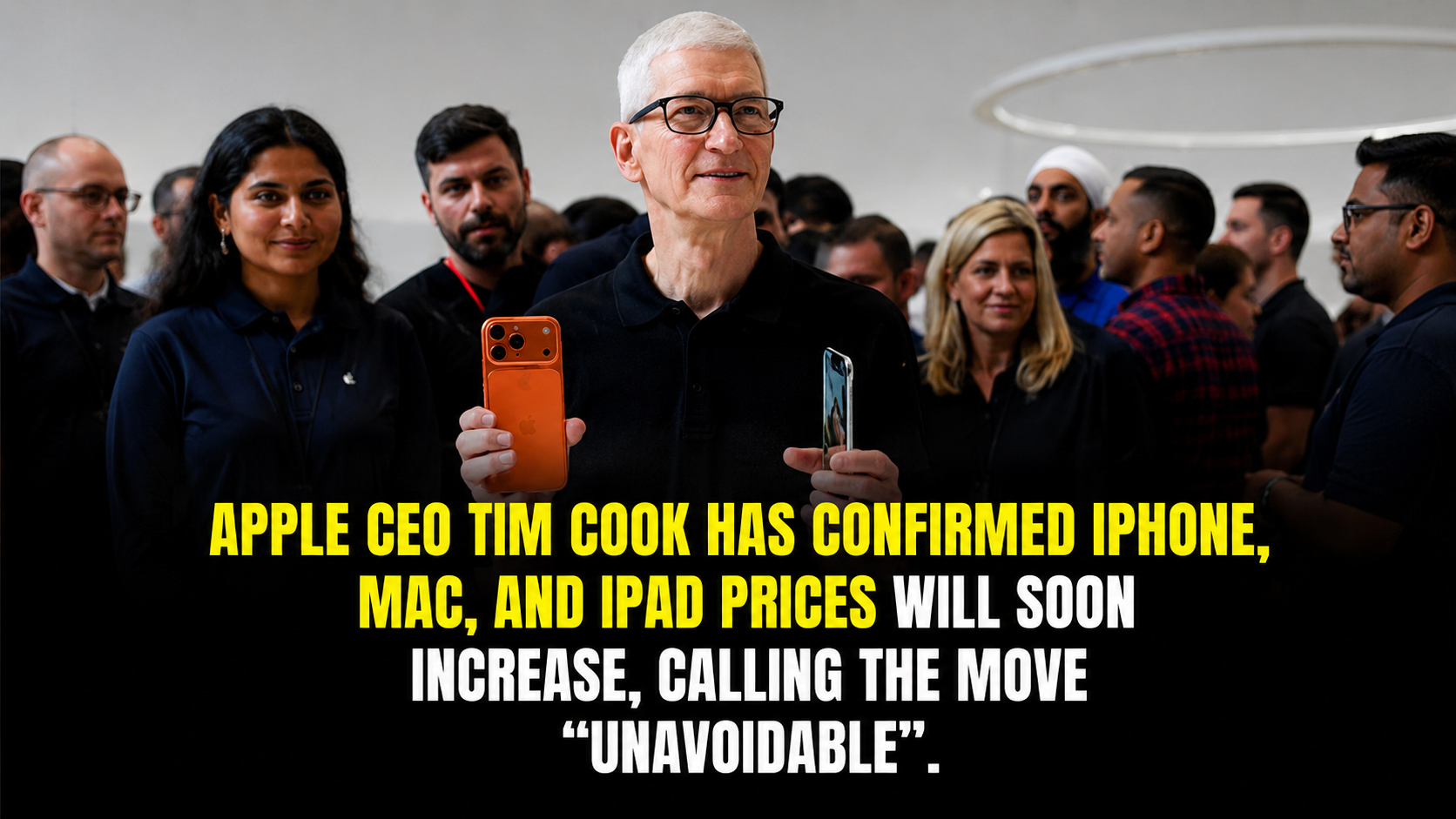
Instead of a smartphone that only costs money, Mode gives users the opportunity to earn from the devices they already own.
Just like Uber turned cars into taxis, and Airbnb turned homes into hotels.
And the results speak for themselves:
- 490M+ users reached
- $1B+ earned and saved by EarnOS users
- $115M+ cumulative revenue
- 32,481% 3-year revenue growth, Deloitte’s #1 fastest-growing software company in North America in 2023.
- $MODE Nasdaq ticker secured
As premium devices get pricier, Mode’s timing looks even more compelling.
Consumers need technology that gives value back.
Advertisers and AI companies need permissioned first-party data.
Mode sits at the intersection of both, creating a platform where users can participate in the value their phone activity creates.
Pre-IPO shares are still available at $0.52, with up to 20% bonus shares for a limited time.
Click now to review the pre-IPO offering while it’s still open.
Amazon’s AI image label rule

The options market does not need a headline to move. It needs a risk that is hard to model.
Amazon’s new requirement that sellers disclose photorealistic AI-generated people inside listing images is exactly that kind of risk. Not because it is morally charged, but because it is operational, unevenly enforced, and easy to miss until it hits conversion, compliance metrics, or listing visibility. The core issue is simple: a legal-style disclosure requirement is now being pushed into the day-to-day machinery of product pages.
The Signal
When a platform introduces a compliance rule that is (1) asset-level, (2) metadata-driven, and (3) enforceable through automated checks, the immediate market question is not “Is this good policy?” It is: does this add friction to GMV, ad performance, or seller participation in a way that becomes visible in quarterly numbers?
Options are where that question gets priced. Not always through a single dramatic spike, but through a subtle reshaping of near-dated implied volatility around known catalysts.
Into this week, Amazon is approaching its next catalyst: the company’s Q2 2026 earnings conference call is scheduled for Thursday, July 30, 2026 (after market close).
The stock is also not sitting in a sleepy place. AMZN recently traded around the low-$230s, leaving traders to decide whether earnings plus platform policy noise deserves more premium than usual.
Could This Quick Morning Trade Mean A Better Retirement?
Each day from 9:30 to 10:45AM, a savvy group investors executed a powerful trade to secure a better retirement and investing expert Dave Aquino wants to show you how to join them.
Everyone who uses this little known strategy tells me the same thing: I wish I had done this sooner!
In his free guide, “How To Master The Retirement Trade”, Aquino reveals the simple…
Why It Matters
Here’s the thing. A disclosure rule sounds cosmetic until you map the failure modes.
Seller-side compliance rules become market-relevant when they create sudden, uneven consequences: image rejections, listing suppression, delayed A+ Content, or a quiet downgrade in creative quality because sellers decide it is not worth the hassle to keep iterating. None of that shows up as a single line item. It shows up as slower testing and, in pockets, weaker conversion.
The mechanics matter. The requirement being discussed by sellers is not “add a note in the copy.” It is closer to “tag the asset correctly before upload.” That’s a workflow change, and workflows are where errors cluster.
Humans are not reliably good at spotting photorealistic AI people by eye anymore. If the platform is pushing machine-readable disclosure, it is signaling intent to scale enforcement through systems, not through judgment calls. That tends to make rules feel optional at first, and then suddenly non-optional.
The Company Behind the Signal
This policy lands right on the fault line of Amazon’s business model. The marketplace is built on third-party selection and velocity, and the ad machine is built on compelling creative. Amazon is also pushing more AI across shopping experiences, which creates a tension: accelerate AI features, but add traceability and disclosure when synthetic humans are involved.
Fundamentally, Amazon has been putting up strong profitability. Recent quarters have shown the familiar split: AWS driving a large share of operating income, while retail and ads determine the perception of growth durability. A seller friction issue matters most when it hits the retail flywheel and ad efficiency at the margin.
The policy question is not whether Amazon can absorb compliance cost. It can. The question is whether seller-side friction shows up where Wall Street is most sensitive: growth and margins in North America retail and advertising, and any incremental regulatory exposure that changes how Amazon runs creative at scale.
Market Expectations
We are heading into a known volatility event (earnings on July 30). The options market typically prices that with elevated front-week implied volatility and fast decay after the event. What you want to watch is whether that curve stays steep, or whether implied volatility remains sticky into the following expirations.
The 7 Things I Wish I’d Known Sooner
I’ve been trading for over 50 years. In that time, I’ve made every mistake an options trader can make – and watched plenty of other people make them too.
Here’s what I learned: the losses you regret most almost never come from a lack of knowledge. They come from skipping a step you already knew to take.
So, I wrote down the 7 steps that matter most. On one page. Run it before any options trade.
It’s called the Smart Trade Options Checklist. Normally $29.97. Free today.
Why would it stay sticky? Two reasons.
- Regulatory spillover risk. If one state-level disclosure standard effectively becomes a national platform rule, future “small policy updates” can arrive more frequently. Traders tend to pay for that kind of longer-duration uncertainty.
- Execution risk that is hard to model. Metadata compliance is binary, but enforcement can be lumpy. One week it is quiet. Another week listings get flagged and sellers scramble. That is the kind of operational surprise that can keep implied volatility from collapsing as much as it normally would after earnings.
If you want an anchor, it is the calendar itself. The market will focus on guidance language on July 30, but also on any mention of seller services, ad demand, and the health of the marketplace.
Strategic Considerations
This is not about calling direction. It is about matching structure to a volatility view.
If you believe this policy change increases the chance of messy, second-order surprises over the next several weeks (not just the next day), you are really expressing a view on volatility persistence, not only on price direction.
Defined-risk structures that map to that view, in plain English:
- Calendar spread (volatility persistence bias). For traders expecting near-dated implied volatility to decay after earnings but longer-dated implied volatility to stay supported, a calendar structure can express that term-structure view with defined risk. Key trade-off: if the stock makes a large move quickly, the near-dated short leg can overwhelm the long leg.
- Debit spread (direction plus capped risk). For traders with a directional view but who do not want to pay for full at-the-money implied volatility, a call debit spread or put debit spread can reduce premium outlay. Key trade-off: capped upside, and you still need the stock to move enough to overcome time decay.
- Iron condor (if you think the market is overpaying). If you believe the market is pricing too much movement into earnings relative to what Amazon typically delivers, a defined-risk short-volatility structure can match that view. Key trade-off: gap risk. Earnings can and do gap.
One more nuance: if you see post-earnings implied volatility not collapsing the way it usually does, that is often a signal that traders think “the event” is not over when the call ends. Sometimes it is regulation. Sometimes it is platform policy. Sometimes it is a second shoe, like enforcement details, or advertiser behavior.
What to Watch
Over the next 2 to 4 weeks, these are the tells that matter more than hot takes:
- Earnings day and the week after (July 30 into early August). Watch whether implied volatility for the next monthly expirations stays elevated after the event, or normalizes immediately.
- How strict enforcement becomes. If Amazon shifts from “policy exists” to “policy is enforced at upload,” friction rises fast.
- Ad and creative spillover. If disclosure requirements spread across more creative surfaces, it becomes a larger operational lift for brands and agencies, not just small sellers.
- Seller behavior changes. If sellers move away from photorealistic lifestyle images with human models because they cannot operationalize tagging reliably, that becomes a conversion and ad efficiency question.
The market does not pay extra premium for policies. It pays for second-order effects that hit numbers.
Worth a look: watch the volatility term structure into and after July 30. If it stays firm, the options market may be telling you this is becoming a “more moving parts” stock again, even if the headline sounds small.
Options Trading Report