
October 13, 2026
Bonus Content: Brent at $103: Trump’s Ceasefire Math Only Works if the Fed Blinks in December
Hey,
I’m going to do something that may seem a little out of the “norm” these days…
I’m going to give you my #1 trade setup. For free.
It’s the same one I used to find winners like:
- 113% on GOOGL in under 2 hours.
- 240% on META in a single session.
I call it the “Opening Bell Breakout.”
It’s one simple setup I look for every morning. When it shows up…
I simply take the trade. And by 10 AM, I’m done.
I’ve put all the details on how it works in a simple, no-fluff guide.
No credit card required. No strings attached.
>> Get Your FREE “Opening Bell Breakouts” Trade Guide Here
This guide shows you the exact 15-minute window I trade, and how to spot the same setups the big funds are watching.
It’s yours for free.
Thomas Wood
P.S. This isn’t a 100-page novel. It’s a short, actionable guide you can read in about 10 minutes and put into action by tomorrow morning. Get it here.
Brent at $103: Trump’s Ceasefire Math Only Works if the Fed Blinks in December
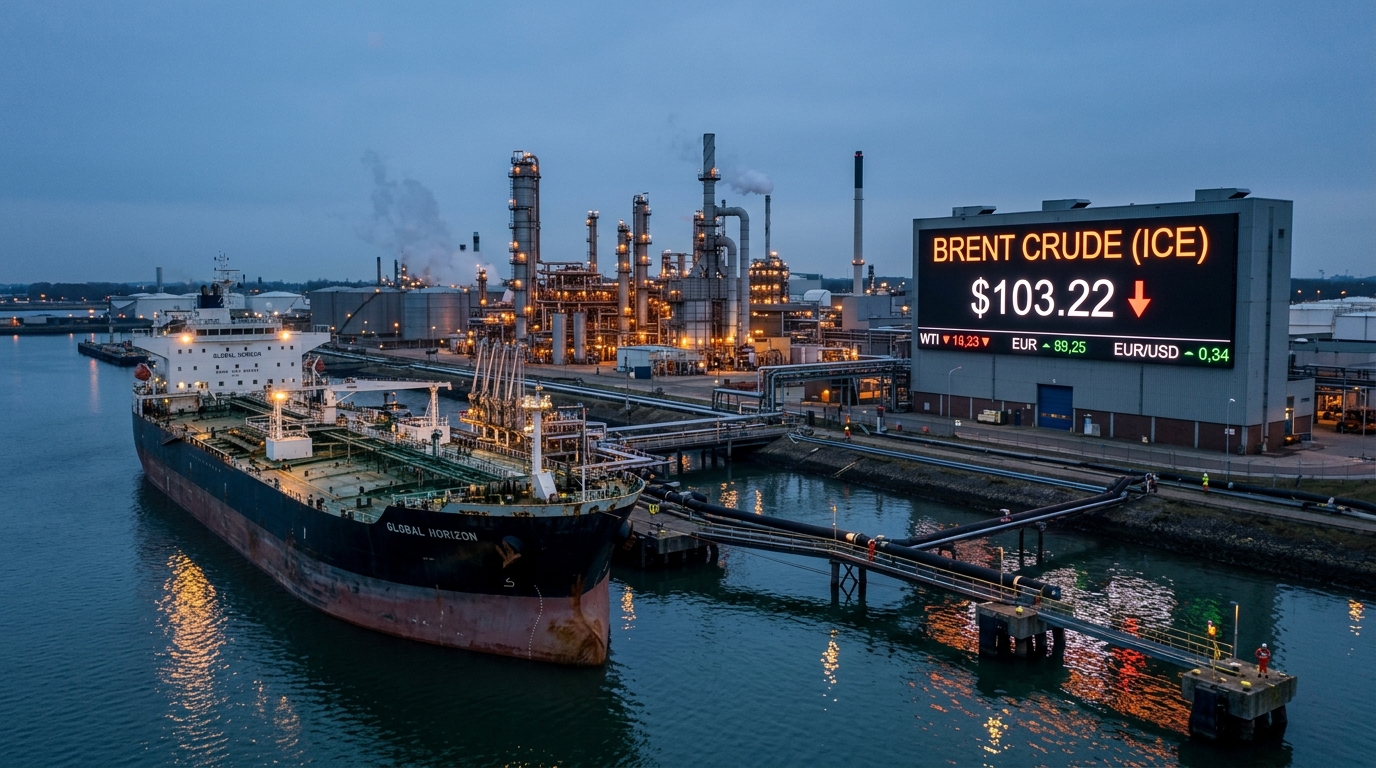
Markets priced a peace dividend Monday morning that neither Moscow nor Kyiv has actually agreed to. Brent crude futures slipped on expectations of more Russian supplies after Trump said both sides had agreed to halt attacks on each other’s energy facilities, with Brent falling $1.54, or 1.47%, to $103.18 a barrel and WTI at $90.31, down 1.68%. European shares rose and eurozone yields eased. By mid-session, Brent had partially recovered. The 90-minute peace premium was real. Whether the underlying deal is, remains another question entirely.
The sequence matters. Trump announced a deal for Russia to supply up to about 4.8 million tons of diesel on Friday, a sharp reversal of U.S. pressure on Moscow’s energy revenues, and then followed Sunday with the energy ceasefire claim. The Treasury Department temporarily waived sanctions on Russian diesel through April 7, 2027 under a general license that covers diesel loaded onto tankers as of Friday. Seven U.S. senators, four Republicans and three Democrats, released a statement pointing out that Congress had banned imports of Russian energy since 2022 and that the deal was illegal. This is not a ceasefire announcement. It is an inflation management operation running three weeks before November 3.
What the Data Actually Shows
The deal reverses a sweeping Russia sanctions law Trump signed last month targeting Moscow’s oil and gas revenues, and comes as high U.S. fuel prices loom over the midterm elections. Trump said Russia would immediately supply over 300,000 tons of diesel, another 500,000 tons in November, and 1,000,000 tons immediately thereafter, with an eventual additional 4 million tons based on refinery capacity. Olena Lennon, practitioner in residence of National Security at the University of New Haven, calls the amounts of Russian diesel Trump is introducing to the market “minuscule.”
Kyiv said Russian strikes on energy facilities continued despite Trump’s claim, with an energy facility near Kharkiv hit Monday. Zelenskyy said Ukraine welcomed the idea, but said Russia was still hitting energy infrastructure in Kyiv and Kharkiv. The ceasefire, in other words, is unilateral optimism posted to Truth Social.
Strategic Interpretation: Pump Prices as Midterm Policy
This is not about ending the war in Ukraine. It is about the October CPI reading and the December 9 Fed decision. The Fed raised the federal funds rate to 3.75%-4.00% in September 2026, its first hike since 2023, as inflation remains above target and the energy shock tied to the Iran war continues to weigh on the outlook. The Fed’s September projections put 2026 headline PCE inflation at 3.7% and core at 3.4%, with policymakers not seeing a return to 2% inflation until 2029. Fixed income markets are now pricing in additional Fed tightening into year-end. A genuine diesel supply easing would trim energy’s contribution to CPI, giving the Fed a data point to pause. Trump knows this. The ceasefire announcement is targeted at that number, not at Kyiv.
Sector Implications: Refiners Face a Ceiling
The 3-2-1 crack spread hit about $64.83 per barrel on October 6, near the widest reading since 1986, and it explains why Valero, Marathon, and Phillips 66 posted a combined $12.6 billion quarterly profit. The share prices of Phillips 66, Valero Energy, and Marathon Petroleum have more than doubled this year as fuel markets tightened with more than 7 million barrels per day of refined product flows offline in the Middle East and Russia. A ceasefire, if it holds, compresses the spread that drove these stocks. The IEA reported that combined net diesel and gasoil exports from Russia and the Gulf were 1.6 million barrels per day lower in August than in February; restored Russian output would reduce demand for U.S. replacement exports and push crack spreads lower from historic levels. Valero reports Q3 earnings October 22. That event carries new tail risk: any confirmed supply normalization will shift the crack spread outlook instantly.
Options Market Analysis
USO’s 30-day implied volatility stood around the mid-40% range as of October 7, and its IV rank was around the middle of its 52-week range. The CBOE Crude Oil ETF Volatility Index (OVX) closed at 48.61 on October 7. That is elevated but not at crisis levels, meaning options are pricing geopolitical uncertainty without panic. USO’s put-call ratio on volume was elevated in mid-September, a meaningful skew toward downside protection that the Monday price drop only partially validated. The put-call asymmetry tells you the market expected lower crude before Trump made it official.
Structured Trade Framework
Bull case on Brent: The ceasefire collapses within days, Russian strikes resume, and Brent reclaims $107-$110. For traders expecting a breakdown in diplomacy, a defined-risk call spread on USO in the November expiry captures a re-escalation move without unbounded risk.
Bear case on Brent / Bull case on refiners unwinding: If Russia actually delivers diesel tonnage in October and the ceasefire holds even loosely, crack spreads compress and refiner multiples contract. A defined-risk bear call spread on VLO or MPC into the October 22 Valero earnings date limits exposure while targeting the margin compression scenario.
Neutral / volatility-focused: With USO IV rank around the middle of its range, a short strangle around current Brent levels in the November expiry collects premium from a market that has already made its directional move. Position sizing must account for a headline-driven gap if ceasefire terms are officially confirmed or definitively denied.
Risk Analysis
The primary risk to any bearish crude position is a genuine, verified ceasefire with Russian confirmation. That event has not occurred. Traders are likely to discount both the ceasefire and the diesel deal until details emerge, as the Kremlin has not publicly confirmed the truce terms. The broader signal is a weaker U.S. commitment to squeezing Russian energy revenues, which erodes part of the sanctions-related risk premium in crude. Secondary risk: Middle East tensions remain live, and the supply shock tied to the Iran war has kept Brent above $100 even as the ceasefire headline hit.
Action Checklist
- Watch the October CPI release: energy’s contribution to that number is the real ceasefire test, not the Truth Social post.
- Track Russian diesel delivery confirmation: cargoes were expected to begin this month, totaling about 13.5 million barrels, the first U.S. import of Russian diesel since March 2022. Actual customs data will move markets more than any announcement.
- Monitor VLO implied volatility ahead of October 22 earnings: any crack spread guidance revision is a catalyst.
- Use defined-risk structures only. Headline risk on this story is binary and fast-moving.
- The next FOMC decision is December 9. Any crude-driven disinflation between now and then resets rate hike odds and changes the equity regime across energy names simultaneously.