Most big pharma companies spent the spring scrambling to figure out what the Section 232 drug tariff would cost them. Johnson & Johnson had already done the deal. That context is what makes this morning’s Q3 report, the first major pharma earnings release since the 100% duty went fully live, worth reading carefully.
Under Section 232 national security authority, an additional 100% duty applies to certain patented pharmaceuticals and associated active pharmaceutical ingredients beginning July 31, 2026. The companies listed in the government’s Annex III faced the tariff first, while every other importer’s date was September 29, 2026. For companies without a deal, the math is brutal. A patented drug manufactured abroad and entering the U.S. at zero duty now carries a 100% cost penalty.
J&J is not in that group. In January 2026, the company announced a voluntary agreement with the Trump Administration to improve access to medicines and lower costs for American patients. The agreement included a tariff exemption for J&J’s pharmaceutical products, tied to commitments including continued U.S. manufacturing and innovation investment. That exemption is now live, and today’s numbers are the first chance to see whether the insulation it provides actually shows up in the financials.
The Manufacturing Bet
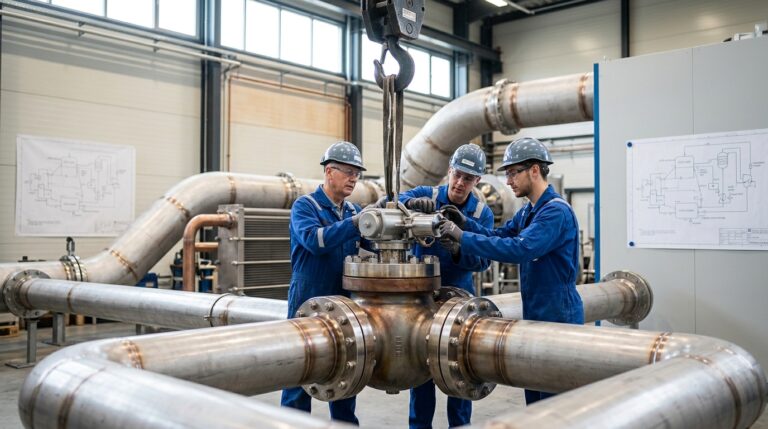
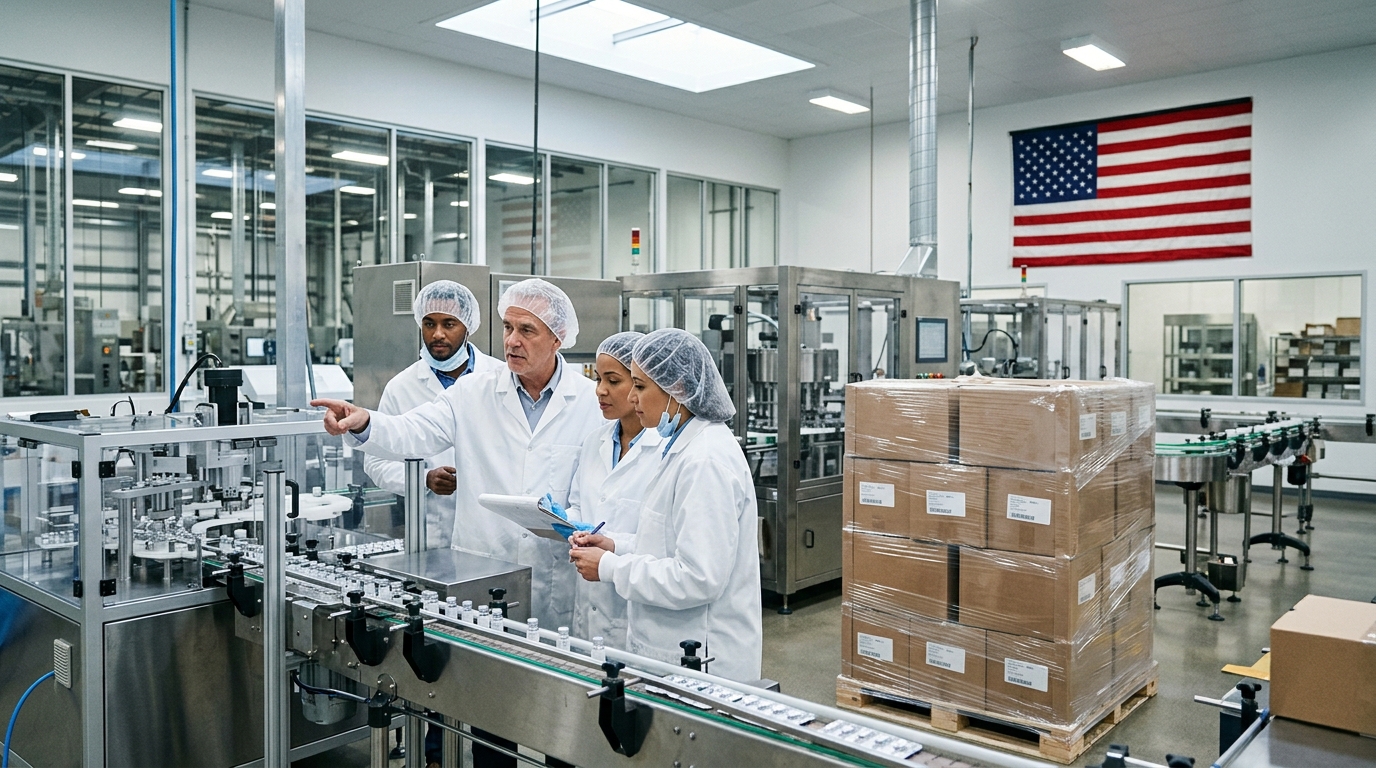
J&J’s latest plant investment is part of a more than $55 billion U.S. manufacturing, research and development, and technology investment program, and that program includes a previously announced commitment running through early 2029. The goal is not to shift some production onshore, it is to manufacture the vast majority of its advanced medicines in the U.S. to meet the needs of U.S. patients. Peers who hedged on that commitment are now paying 100% on every covered import.
The government’s own proclamation cited the underlying problem: only 15% of patented active pharmaceutical ingredients by volume are produced domestically for the U.S. market. J&J is trying to be on the right side of that ratio before the tariff structure tightens further. Companies with an HHS-approved onshoring plan qualify for a 20% rate rather than 100%, and that reduced rate runs through April 2030, when it climbs to 100%.
What the Numbers Need to Show
In the most recent quarter, adjusted EPS of $2.90 on revenue of $25.31 billion topped estimates and prompted management to lift its full-year outlook, and this report matters because it will test whether that momentum can continue as the company pushes toward its first-ever $100 billion annual revenue milestone. Full-year 2026 estimated reported sales guidance was raised to a midpoint of $101.1 billion, up 7.3% year over year, with adjusted EPS guided to $11.68.
Ahead of the report, J&J is projected to show solid revenue growth exceeding 5% year over year, driven by oncology drugs and MedTech recovery, though adjusted EPS faces pressure from one-time deal-related costs tied to recent transactions. Those charges stem from the Firefly Bio acquisition and the collaboration with Sail Biomedicines. The EPS consensus is fragmented, with some sell-side estimates ranging from roughly $2.5 to $2.7 depending on accounting basis, while revenue estimates cluster near the mid-$25 billion range.
The tariff exemption does not guarantee clean numbers, but it removes a headwind that is hitting competitors right now. That asymmetry is the investment question this quarter.
The Larger Policy Storm
J&J’s report lands inside a larger policy fight. PhRMA sued the Trump administration on October 7, taking aim at CMS’ final rule for a new Medicare Part B payment model that uses international price benchmarks in its rebate calculation, arguing the agency overstepped its authority. The suit targets the Global Benchmark for Efficient Drug Pricing model, known as GLOBE, a final rule built around a benchmark informed by prices in 19 other countries.
GLOBE is set to take legal effect November 30, 2026, with a five-year test period beginning in April 2027, and drugmakers who fail to pay the specified rebates will face penalties. J&J, as a company that has signed a voluntary MFN-related agreement, sits in a different position than the companies that PhRMA is fighting for. Whether that accommodation insulates it from GLOBE’s reach, or just from the loudest part of the argument, is a question management will likely face on this morning’s call.
Bull and Bear
The bull case is straightforward: J&J built its domestic manufacturing position early, locked in a tariff exemption, and enters Q3 with a strong record of beating quarterly expectations. Stelara’s loss of patent exclusivity to biosimilars remains the largest drag, and erosion is expected to deepen this quarter, but the oncology portfolio, including DARZALEX, CARVYKTI, and RYBREVANT, has been picking up the slack.
The bear case centers on EPS trajectory. Consensus earnings estimates have not been moving in one direction all year, and the stock has not always rewarded clean beats unless guidance moves higher. The December 8 business review gives management a second window to reset expectations. What they say this morning about the tariff benefit, and how they quantify it, sets the terms of that conversation.