A company that just reported $115.8 billion in quarterly revenue, up 103% from a year ago, is now trading at roughly 8 to 10 times forward earnings. That gap between the business and the stock is the essential question facing anyone looking at Nvidia today. The answer depends almost entirely on whether you trust the numbers.
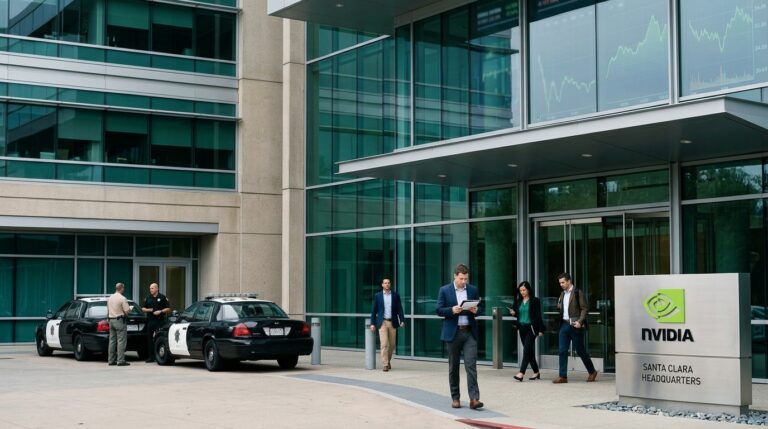
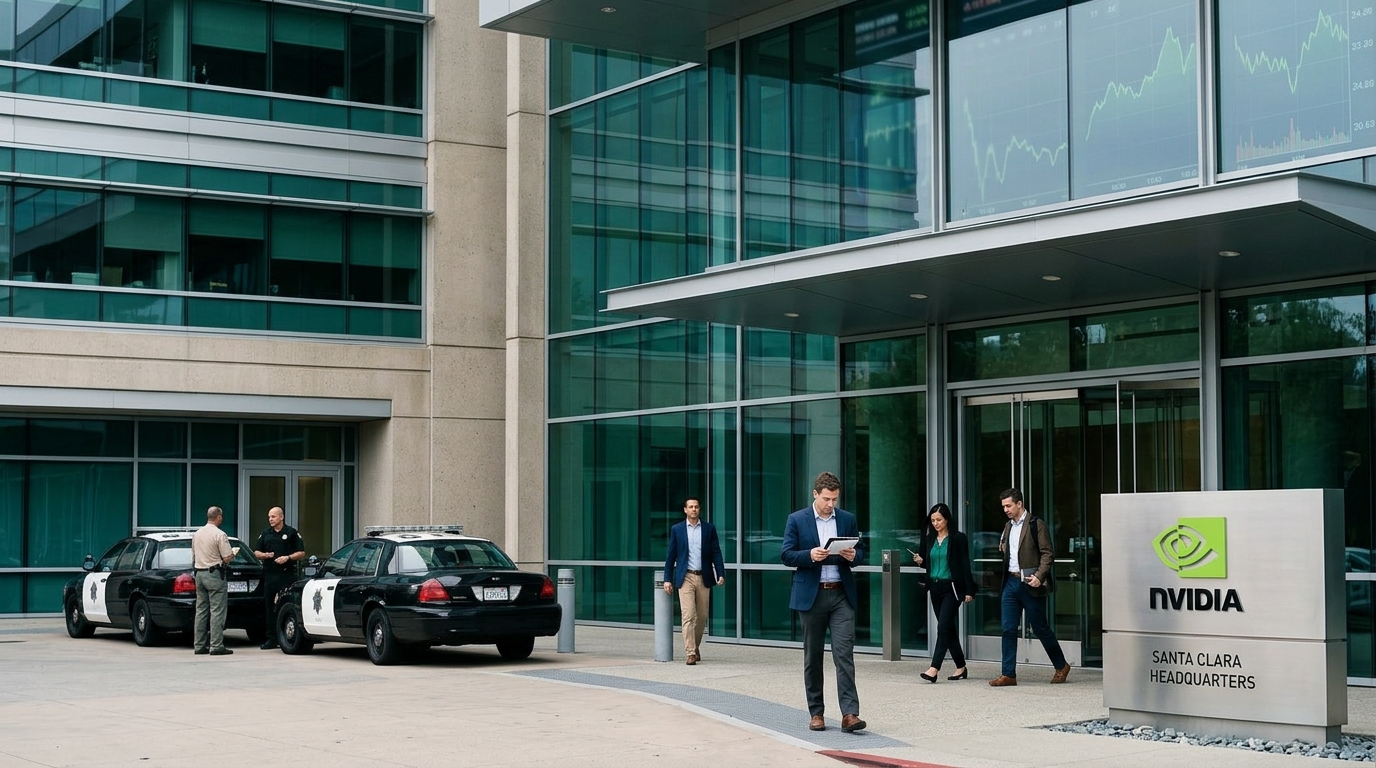
The SEC is probing Nvidia’s accounting practices, according to Reuters, which cited two people briefed on the matter. The accounting scrutiny expands on a civil investigation first reported earlier this week, which is examining whether Nvidia’s investor disclosures, particularly those tied to Asia, were misleading. Neither the SEC nor Nvidia has commented on the inquiry, and investigators have not publicly identified the specific financial statements or transactions under review.
The timing is not coincidental. In late 2025, Nvidia changed its method for reporting revenue by geographic location, replacing customer billing addresses with customer headquarters, and the company’s filings show that Singapore ceased to appear as a separate category in its geographic revenue breakdown after the change. The Financial Times reported that Nvidia introduced the revised methodology even as Singapore had accounted for nearly half of worldwide revenue under the prior approach. That is the kind of disclosure shift that draws regulatory attention regardless of whether it was legitimate.
California Attorney General Rob Bonta issued an investigative subpoena to Nvidia on Thursday as part of a probe tied to news reports about former CEO Jensen Huang’s relationship with an alleged Chinese spy and questions about whether advanced chips or confidential information reached China despite U.S. restrictions. Bonta said the conduct of Nvidia and its former CEO raises bright red flags, including about the ways in which the company may have misled investors. His office is investigating whether Nvidia or Huang’s actions resulted in China obtaining advanced chips or confidential information, and if Nvidia misled investors and the public about this risk.
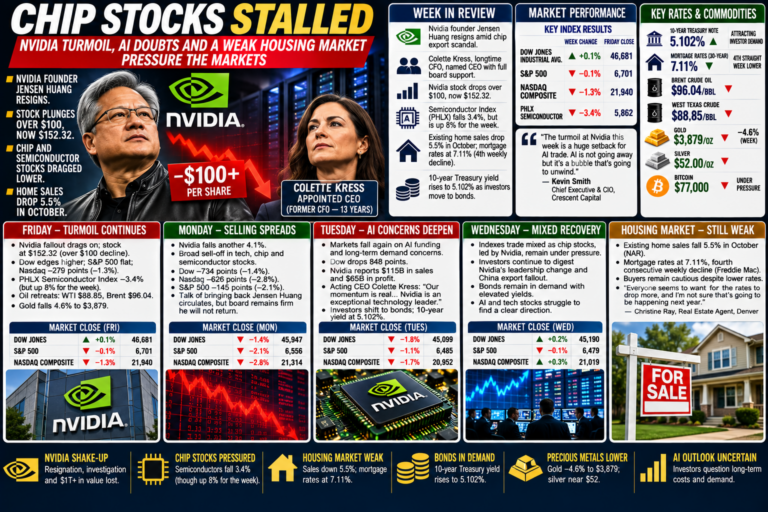
Nvidia’s board announced on November 12, 2026, that Jensen Huang had resigned as President, Chief Executive Officer, and a member of the Board, effective immediately. CFO Colette Kress was appointed interim CEO, continuing to serve in both roles while the board searches for a permanent successor. Huang is due before House committees on December 1, 2026, with general counsel Tim Teter scheduled for December 2, 2026.
The Justice Department has also been reviewing Nvidia’s roughly $12.93 billion deal to buy open-source platform Hugging Face alongside a broader antitrust investigation into the company’s acquisitions and practices, Reuters reported. Four separate legal fronts in nine days is not a situation the market discounts lightly.
What the Valuation Actually Says
Nvidia grew quarterly revenue 103% yet trades at roughly 8 to 10 times forward earnings. That divergence is the clearest signal that the market is pricing something beyond cyclical risk. The most immediate risk is to investor confidence. Nvidia’s valuation rests heavily on trust that its reported growth is durable and accurately described.
This is not Nvidia’s first accounting settlement. The parallel with the current probe is hard to miss. The question appears again to be whether investors are getting a clear picture of where revenue originates. The difference is scale: the dollar figures in Nvidia’s business today dwarf anything from the crypto mining boom era.
Bull vs. Bear
The bull case is structural. Nvidia reported revenue of $115.8 billion in its most recent quarter, up 103% from a year ago, with data center revenue of $107.6 billion, up 110%. The board approved a $150 billion increase to its share repurchase authorization in September 2026, and the company returned $28.1 billion to shareholders in the third quarter alone. At less than 10 times forward earnings, a company compounding revenue at triple digits is arithmetically cheap, assuming the earnings are real.
The bear case is exactly that qualifier. An SEC civil investigation is a fact-finding process and does not establish wrongdoing or guarantee formal enforcement action. But it does cloud every reported figure. If geographic revenue was obscured, the composition of that growth matters: data center demand concentrated in one region carries a different risk profile than the same number spread across sovereign customers in Europe and North America.
What Investors Should Watch
Three things will determine whether the thesis holds. First, any public indication from the SEC of which specific disclosures are under scrutiny. Second, what emerges from Huang’s December 1, 2026 congressional testimony regarding Nvidia’s knowledge of chip diversions through third-party intermediaries like Megaspeed. Third, whether Interim CEO Kress provides any additional geographic revenue detail when the next quarterly filing is made.
The SEC under President Trump has said it will focus enforcement on securities fraud, including accounting violations, and it recently announced a new financial reporting and accounting unit within its enforcement division aimed at developing cases in accounting and auditing areas. That the new unit is now examining Nvidia is not a minor signal.
The business under the stock is extraordinary. Nvidia’s revenue is more than doubling, yet the stock trades at a lower forward multiple than its slower-growing rivals. The price is either a generational opportunity or a warning that something in the reported numbers does not hold. The SEC will help decide which.