
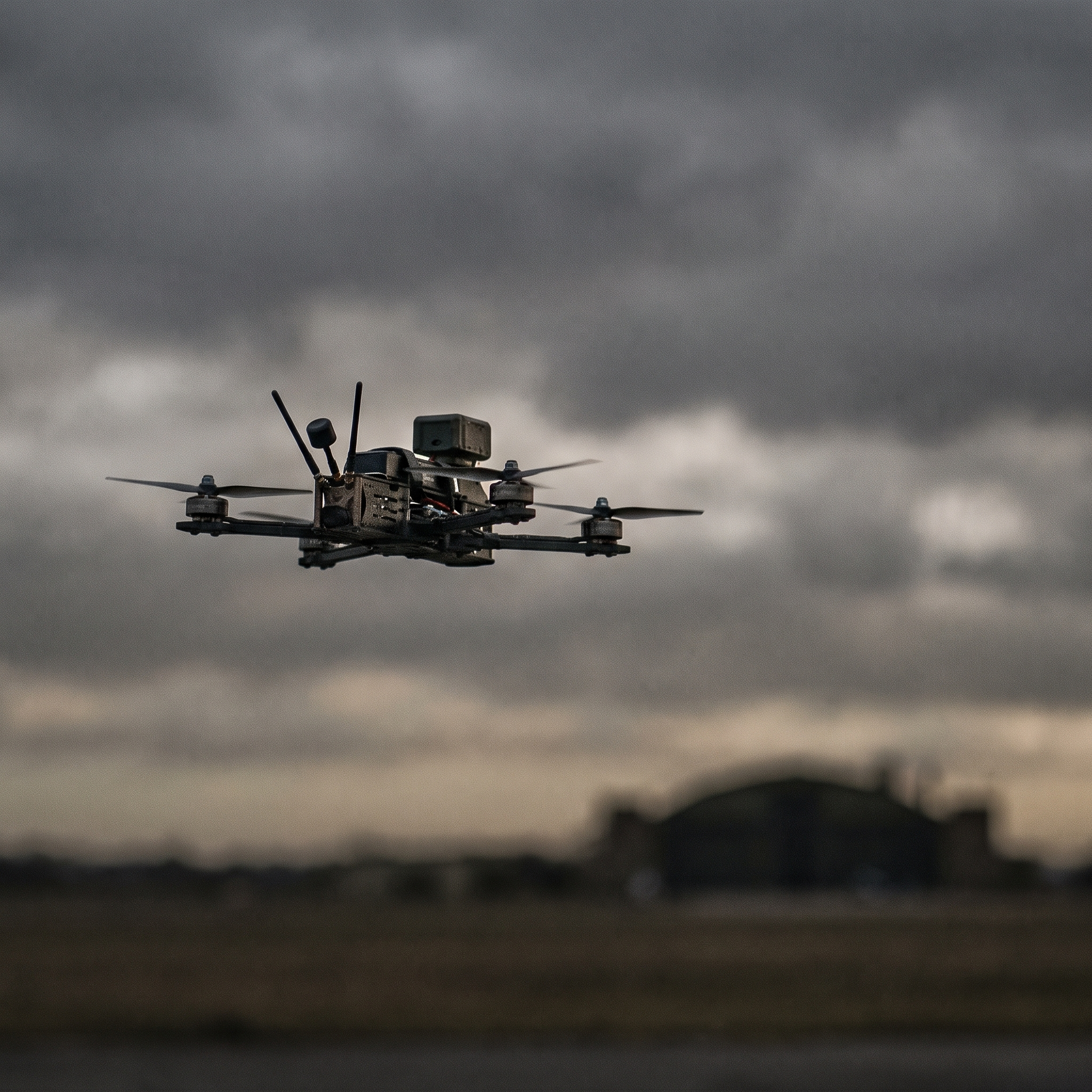
The Pentagon Has a Speed Problem
For decades, the U.S. military has relied on a procurement system designed to acquire some of the most complex machines ever built.
Fighter aircraft can take years to develop.
Ships can take even longer.
Major weapons programs can stretch across administrations, budgets and generations of technology.
That system still has an important role.
But it was not designed for a world where commercially available technology can change dramatically in a matter of months.
Software gets updated.
Artificial intelligence models improve.
New drones reach the battlefield.
Electronic threats evolve.
Sensors collect more information.
Processors become more powerful.
And technologies originally developed for commercial markets can suddenly have military applications.
That creates a very different challenge for the Pentagon:
How does the world’s largest military adopt technology when the technology itself may evolve faster than the traditional procurement process?
The Pentagon has increasingly acknowledged that challenge.
One of the clearest examples has been the Replicator initiative, which was designed to accelerate the fielding of autonomous systems while reducing barriers between commercial technology companies and the Department of Defense.
More than 500 commercial firms were considered for hardware, software and major subcontracting opportunities across Replicator’s first two tranches.
Of the companies ultimately receiving hardware and software contracts, 75% were classified as nontraditional defense contractors.
That statistic may reveal something important.
The Pentagon is not abandoning America’s enormous defense contractors.
But it is becoming increasingly willing to look beyond them.
The Department of Defense has also begun giving autonomy greater prominence in its budget. Its fiscal 2026 budget request identified $13.4 billion specifically for autonomy and autonomous systems, including unmanned aircraft, maritime systems, ground vehicles and the software required to connect them.
Meanwhile, acquisition reforms have sought to make it easier for commercial software developers and other nontraditional vendors to work with the military.
The result is an emerging defense-technology ecosystem that can look very different from the industry investors may be accustomed to following.
This report examines five publicly traded companies operating inside different parts of that transition:
Red Cat Holdings (NASDAQ: RCAT) Small drones, autonomy and battlefield reconnaissance
Leonardo DRS (NASDAQ: DRS) Advanced sensors, edge computing and electronic systems
V2X (NYSE: VVX) Technology integration, readiness and mission support
Ondas Holdings (NASDAQ: ONDS) Autonomous systems and counter-drone technology
Mercury Systems (NASDAQ: MRCY) Mission-critical computing and signal processing
These companies vary significantly in size, maturity, business model and risk.
They are not presented as recommendations or predictions about future share-price performance.
Instead, they offer five different ways to research a larger question:
What happens when the Pentagon begins changing not only the technology it buys, but how quickly it expects that technology to reach the field?
Part I: The Procurement Revolution
The Pentagon Is Looking Beyond the Traditional Defense Industry
For most investors, the defense industry is easy to picture.
A handful of enormous companies build fighter aircraft, missiles, ships, helicopters and other major weapons systems.
Those companies remain central to American military power.
But the technology increasingly appearing on modern battlefields doesn’t always originate inside the traditional defense industry.
Artificial intelligence is largely commercial.
Advanced semiconductors are commercial.
Many drones began as commercial technology.
Cloud computing is commercial.
Computer vision, machine learning, robotics and advanced communications all have enormous civilian markets.
That creates a problem for a military procurement system historically built around specialized defense contractors and long development cycles.
The Pentagon increasingly needs access to technologies whose innovation cycles may be measured in months rather than decades.
One response has been to open more doors to nontraditional vendors.
The Defense Innovation Unit, or DIU, was created specifically to help bridge the gap between commercial technology companies and national-security customers.
Since 2016, DIU has awarded hundreds of agreements through its Commercial Solutions Opening process. According to the Department of Defense, 88% of more than 500 other-transaction awards made through that process went to nontraditional vendors.
That doesn’t mean the traditional defense primes are disappearing.
Far from it.
Instead, a second layer of the defense industry appears to be gaining importance.
Smaller technology companies can develop specialized products.
Large defense contractors can integrate them.
Commercial businesses can adapt technology for military use.
And the Pentagon can increasingly experiment with products before committing to traditional programs of record.
For investors researching the sector, that could broaden the definition of what constitutes a “defense company.”
Part II: Cheap, Scalable and Replaceable
Why the Economics of Military Hardware Are Being Reconsidered
Some of America’s most advanced military systems are extraordinarily expensive because they are designed to perform extraordinarily difficult missions.
But warfare in Ukraine and the Middle East since 2022 has highlighted another side of modern conflict.
Sometimes quantity matters.
Sometimes inexpensive systems can create problems for extremely expensive ones.
And sometimes losing the equipment is part of the plan.
That is one reason the term “attritable” has become increasingly important in defense technology.
An attritable system is designed with the possibility that it may be lost during operations.
That changes the economics.
Instead of assuming every platform must survive for decades, militaries can potentially deploy larger numbers of less-expensive systems for reconnaissance, communications, electronic warfare or strike missions.
Small drones provide perhaps the clearest example.
The Pentagon has called drones one of the most consequential battlefield innovations in a generation and has moved to reduce barriers that slowed their acquisition.
Its 2025 drone policy directed the military services to establish dedicated program offices focused on unmanned aircraft, with an immediate emphasis on small systems. The policy also encouraged more rapid acquisition and greater interaction between manufacturers and operational military units.
This is not simply about buying more drones.
It represents a different philosophy of military technology:
Build faster. Test faster. Improve faster. Deploy at scale.
That philosophy provides the backdrop for the first company in this report.
1. Red Cat Holdings (NASDAQ: RCAT)
When a Drone Becomes Standard Equipment
Red Cat is considerably smaller than the traditional companies most investors associate with defense.
That is part of what makes it interesting to study.
Through its Teal Drones subsidiary, Red Cat develops small unmanned aircraft designed for defense, government and security applications.
Its Black Widow drone is particularly important to the company’s Pentagon story.
In 2024, Teal was selected as a winner of the U.S. Army’s Short Range Reconnaissance Program of Record following Army testing and evaluation.
The purpose of a small reconnaissance drone is straightforward.
A soldier can send a camera into the sky rather than exposing a person to obtain the same information.
But the technology behind that simple concept is becoming increasingly sophisticated.
Small drones can incorporate thermal imaging, computer vision, artificial intelligence and other software capabilities.
They can become nodes in a larger battlefield network.
And increasingly, they can potentially work with other autonomous systems rather than operating individually.
Why This Fits the Pentagon’s Shift
The significance of Red Cat is less about one drone and more about what the Army’s procurement decision represents.
The Pentagon wants more American-made small drones.
It wants military units to gain greater familiarity with them.
And it wants the acquisition process to move faster.
Red Cat sits directly inside that experiment.
The company disclosed that Teal received an additional $9.5 million purchase order under the Army’s Short Range Reconnaissance program in May 2026.
Red Cat has also expanded its work beyond individual aerial drones into areas including autonomous swarming technology and uncrewed maritime systems.
That broader strategy reflects another Pentagon priority: autonomous systems may increasingly need to work together.
The Technology to Understand: Swarming
Traditional drone operations often involve a human controlling an individual aircraft.
Swarming attempts to change that relationship.
Software can potentially coordinate multiple autonomous systems so they share information, divide tasks and respond collectively to changing conditions.
The military implications are significant.
Instead of controlling ten drones individually, an operator could potentially assign an objective to a group of systems.
The autonomy software handles more of the coordination.
Red Cat’s acquisition of Apium Swarm Robotics expanded the company’s capabilities in this area.
The broader concept is still developing, and technical, regulatory and operational challenges remain.
But the direction is worth understanding.
The Pentagon doesn’t simply want more unmanned systems.
It increasingly wants those systems to become more autonomous.
What Could Support the Research Case
Researchers may want to monitor:
- Additional Army orders under the Short Range Reconnaissance program
- Adoption of Black Widow by allied militaries
- Production capacity
- Development of swarm autonomy
- Expansion into uncrewed maritime systems
- The Pentagon’s broader small-drone procurement strategy
What Could Challenge It
Red Cat is a much smaller company than the traditional defense contractors.
That can create substantially different risks.
Winning a military program does not guarantee that future orders will arrive at the scale or timing investors expect.
Production execution matters.
Competition is intense.
Government procurement can change.
New drone technologies can emerge quickly.
And acquisitions introduce additional execution risk.
For those reasons, Red Cat may be better understood as a case study in the Pentagon’s push toward smaller technology suppliers rather than simply as a “drone stock.”
Part III: The Battlefield Is Becoming a Data Problem
A modern military can collect enormous amounts of information.
Satellites can observe the ground.
Aircraft carry sophisticated sensors.
Drones stream video.
Radar systems track objects.
Electronic warfare equipment searches the electromagnetic spectrum.
Soldiers carry networked devices.
Vehicles generate data.
But collecting information is only part of the challenge.
Someone, or increasingly some computer, has to make sense of it.
That makes three capabilities increasingly important:
Sensing.
Processing.
Decision-making.
The objective is not simply to collect more data.
It is to reduce the amount of time between detecting something and deciding what to do about it.
That brings us to a company whose technology often operates behind the scenes.
2. Leonardo DRS (NASDAQ: DRS)
The Technology Between Detection and Decision
Leonardo DRS does not fit neatly into one defense category.
And that is precisely why it belongs in this report.
The company develops advanced sensing, network computing, force-protection and electric-power technologies for U.S. and allied military customers.
Its systems operate across land, air, sea, space and cyber environments.
Among its capabilities are infrared sensors, signals-intelligence systems, electronic warfare technology, tactical radar, computing systems and equipment used for counter-drone applications.
The common thread is information.
Detect something.
Process the information.
Move the data.
Help someone make a decision.
Why This Fits the Pentagon’s Shift
Modern warfare increasingly depends on connecting sensors and weapons across multiple domains.
A sensor on one platform may detect a target.
Another system may process that information.
A network may distribute it.
A completely different platform may respond.
For that model to work, information has to move quickly and reliably.
Leonardo DRS describes its network-computing technology as supporting data processing, fusion and dissemination at the tactical edge.
That phrase, “the tactical edge,” is important.
It refers to places where military operations actually occur, often far away from large data centers and sometimes with limited connectivity.
Computing in those environments has different requirements from computing in an office.
Equipment may need to withstand extreme temperatures, vibration, dust and electronic interference.
It also has to remain secure.
The Technology to Understand: Edge Computing
Much of the modern internet relies on enormous centralized data centers.
The battlefield cannot always do that.
A drone operating in a contested environment may lose its connection.
A vehicle may need to process sensor information immediately.
A radar system cannot necessarily wait for data to travel to a distant server and back.
Edge computing moves processing closer to where the data is generated.
For the military, that can mean putting powerful computing directly inside aircraft, vehicles, ships, sensors and other platforms.
Artificial intelligence makes this even more important.
AI models require processing power.
If the military wants AI-enabled systems operating in environments where communications may be disrupted, some of that intelligence may need to reside directly on the platform.
Leonardo DRS specifically identifies AI-enabled computing, sensing and networked systems among the capabilities relevant to evolving Pentagon priorities.
What Could Support the Research Case
Researchers may want to monitor:
- Demand for advanced sensing systems
- Tactical edge-computing programs
- Counter-UAS technologies
- Electronic warfare spending
- Military networking modernization
- Navy electric-power and propulsion programs
- Integration of AI into battlefield computing
What Could Challenge It
Leonardo DRS remains heavily exposed to government spending.
Approximately 80% of its 2025 revenue was associated with the U.S. government as end user, with that revenue heavily concentrated in the Defense Department.
That creates stability when funded programs are performing well, but it also creates dependency on federal budgeting and procurement decisions.
Programs can be delayed.
Priorities can shift.
Competitors can win contracts.
And emerging technologies can take longer to reach large-scale procurement than expected.
The company therefore provides a useful way to research the technology transition without assuming that every Pentagon technology initiative will translate immediately into financial results.
Part IV: New Technology Still Has to Work in the Real World
The defense-technology story often focuses on invention.
AI.
Drones.
Robotics.
Sensors.
Advanced communications.
But inventing a military technology and operating it at scale are two very different things.
Someone has to integrate the technology.
Someone has to maintain it.
Someone has to train personnel.
Someone has to modernize existing platforms so they can use it.
And someone has to keep those systems functioning at military installations around the world.
That creates another side of the Pentagon’s technology shift that receives far less attention.
3. V2X (NYSE: VVX)
The Integration Problem
V2X is not primarily a manufacturer of flashy new weapons.
Its role is different.
The company provides mission solutions, communications, training, logistics, modernization and technology integration to defense customers around the world.
Its operations span hundreds of locations across dozens of countries and territories.
The substantial majority of its revenue comes from U.S. government customers, with the U.S. Army representing its largest individual customer.
That places V2X on the operational side of military modernization.
Why This Fits the Pentagon’s Shift
The Pentagon can purchase a new technology.
That doesn’t mean the military is immediately ready to use it.
Consider what happens when a new sensor is added to an aircraft.
It may need to communicate with older systems.
Software may need to be updated.
Personnel may need training.
Maintenance procedures may change.
Cybersecurity requirements may need to be addressed.
Existing platforms may need modification.
That process can become even more complicated when hundreds or thousands of systems are deployed across the world.
V2X provides services across that gap between acquiring technology and actually operating it.
Its capabilities include assured communications, mission solutions, platform renewal and modernization, integrated supply-chain management and technology-enabled training.
The Technology to Understand: Systems Integration
Military equipment rarely operates independently.
Aircraft talk to networks.
Networks connect to command centers.
Sensors feed software.
Software supports decisions.
Weapons depend on targeting information.
New technology therefore has to work with systems that may have been designed years or even decades earlier.
Systems integration is the process of making those different pieces operate together.
It isn’t as visually compelling as a drone demonstration.
But without it, modernization can fail.
The faster the Pentagon adopts new technologies, the more important integration may become.
What Could Support the Research Case
Researchers may want to monitor:
- Pentagon modernization programs
- Assured communications contracts
- Technology integration work
- Training and simulation programs
- Platform upgrades and lifecycle extension
- Army spending priorities
- Expansion of international defense support
What Could Challenge It
V2X is heavily dependent on government customers.
It also operates a services-heavy business, making its economics different from a defense manufacturer selling proprietary hardware.
Contracts can be recompeted.
Margins can vary by program.
Government shutdowns and funding delays can disrupt activity.
And larger defense contractors compete for many of the same opportunities.
V2X therefore represents a different way of studying the technology shift:
Not who invents the technology.
Who helps the Pentagon make it usable.
Part V: The Drone Creates Another Market
Every new military technology creates a response.
Radar led to stealth.
Missiles led to missile defense.
Electronic communications led to electronic warfare.
And drones are creating an increasingly urgent market of their own:
Counter-drone technology.
Small unmanned aircraft present an unusual economic problem.
A relatively inexpensive drone can threaten equipment worth many times more.
That makes using an expensive missile to destroy every incoming drone potentially unsustainable.
The Pentagon has acknowledged the challenge.
In 2025, the Department of Defense established Joint Interagency Task Force 401 to accelerate the development and deployment of counter-small-unmanned-aircraft capabilities.
The objective includes finding more affordable ways to detect, track and defeat hostile drones.
That brings us to perhaps the least conventional company in this report.
4. Ondas Holdings (NASDAQ: ONDS)
The Race to Detect and Defeat the Drone
Ondas operates across defense, security and autonomous systems.
Its autonomous-systems business includes technologies for intelligence, surveillance and reconnaissance, unmanned ground vehicles and counter-UAS applications.
The counter-UAS piece is particularly relevant.
Stopping a hostile drone can require several different technologies.
First, the system needs to detect the drone.
Then it needs to identify and track it.
Software may need to determine whether it represents a threat.
Finally, something has to neutralize it.
That final step is sometimes referred to as the effector.
Ondas has been building toward a broader “sensor-to-effector” model that attempts to connect those pieces.
Why This Fits the Pentagon’s Shift
The drone market cannot be understood by looking only at companies building drones.
As unmanned systems proliferate, demand for technology capable of defeating them may also change.
The Pentagon’s establishment of a dedicated counter-UAS task force illustrates how seriously it views that threat.
Ondas has expanded its autonomous-defense portfolio through acquisitions, adding technologies across persistent intelligence, counter-UAS and autonomous systems.
That makes the company an interesting research subject because it sits on both sides of the drone equation.
Autonomous systems can provide surveillance and other capabilities.
Counter-UAS systems are designed to stop hostile ones.
The Technology to Understand: Sensor-to-Effector
Imagine a hostile drone approaching a military installation.
One system detects it.
Another classifies it.
Software tracks its movement.
A command system determines the appropriate response.
An interceptor, electronic-warfare system or another technology attempts to neutralize it.
Historically, those pieces may come from several different suppliers.
A sensor-to-effector architecture attempts to connect the entire chain.
The goal is speed.
The shorter the time between detection and response, the less opportunity the threat has to reach its target.
What Could Support the Research Case
Researchers may want to monitor:
- Counter-UAS deployments
- U.S. defense contracts
- Integration of acquired technologies
- Autonomous ISR programs
- Expansion of sensor-to-effector capabilities
- Adoption by allied governments
- Development of affordable counter-drone systems
What Could Challenge It
Ondas requires particularly careful research.
The company has expanded through acquisitions, creating integration risk.
It competes in rapidly evolving markets where new technologies can emerge quickly.
Government testing does not necessarily result in large procurement programs.
The economics of counter-drone systems are also still developing as militaries determine which technologies work best against different types of threats.
That makes Ondas one of the more speculative research cases in this report.
The theme may be compelling.
The company still has to execute.
Part VI: The Computer Inside the Weapon
Some of the most important military technology is almost invisible.
It sits inside the system.
A radar needs processors.
An electronic warfare system needs processors.
A missile may require advanced electronics.
An aircraft collects enormous amounts of sensor data.
A command-and-control system has to process information quickly.
And as artificial intelligence moves closer to the battlefield, computing requirements may increase further.
That creates a “picks-and-shovels” side to defense technology.
Rather than building the finished platform, some companies build the electronics that help make advanced platforms possible.
5. Mercury Systems (NASDAQ: MRCY)
Bringing Commercial Computing Power to the Battlefield
Mercury Systems develops mission-critical processing technology used across aerospace and defense applications.
Its products and integrated solutions are deployed across more than 300 programs and dozens of countries.
The company’s technology appears in applications including radar and sensor processing, electronic warfare, avionics, weapons and command-and-control systems.
But Mercury’s larger relevance to this report comes from the intersection between two worlds:
Commercial computing technology and military requirements.
Commercial semiconductor technology moves quickly.
The military wants access to that performance.
But commercial electronics aren’t automatically suitable for military systems.
They may need to be ruggedized.
Secured.
Modified.
Integrated.
And engineered to operate reliably in extremely demanding environments.
That is the gap Mercury attempts to fill.
Why This Fits the Pentagon’s Shift
The more intelligence the Pentagon pushes toward individual platforms, the more computing those platforms may require.
A sensor collecting information is useful.
A sensor capable of analyzing information locally may be considerably more powerful.
This is especially important for artificial intelligence.
Running AI at the “edge” means processing data near where it is collected rather than relying entirely on remote computing infrastructure.
That can matter enormously in military environments where communications may be jammed, disrupted or unavailable.
Mercury specifically identifies emerging AI processing at the edge as an area for its technology.
The Technology to Understand: Processing at the Edge
Consider a military aircraft carrying several sophisticated sensors.
Those sensors can generate enormous amounts of data.
Sending all of that raw information somewhere else for processing may create delays or require communications links that could be disrupted.
Edge processing allows more of the work to happen directly onboard.
The system can potentially analyze information, identify what matters and send the most useful data onward.
That can shorten the path from:
Detection → Processing → Decision → Action
As sensors become more sophisticated and AI becomes more capable, the computing inside military platforms may become increasingly important.
What Could Support the Research Case
Researchers may want to monitor:
- Defense electronics demand
- Radar and sensor programs
- Electronic warfare spending
- AI processing at the edge
- Adoption of open-system architectures
- Program wins with major defense contractors
- Manufacturing and execution improvements
What Could Challenge It
Mercury has faced execution challenges in the past, making operational performance particularly important to monitor.
Defense electronics programs can also be technically demanding.
Production delays, component shortages, quality issues or cost overruns can affect results.
The company sells into programs controlled by both government customers and major defense contractors, meaning Mercury does not control every factor affecting demand.
And like every company in this report, it remains exposed to changes in defense priorities and program funding.
For researchers, the company may therefore be most interesting as a way to study the computing infrastructure beneath advanced military technology.
Five Companies, Five Different Parts of the Shift
These five companies do not compete for the same opportunity.
That is intentional.
Together, they illustrate how broad the Pentagon’s technology transition has become.
Red Cat Holdings (RCAT) The Pentagon wants smaller, scalable autonomous systems that can reach troops faster.
Leonardo DRS (DRS) More sensors and more data increase the importance of battlefield computing and information processing.
V2X (VVX) New technology still has to be integrated, maintained, supported and operated alongside existing systems.
Ondas Holdings (ONDS) The spread of inexpensive drones is creating demand for technologies designed to detect and defeat them.
Mercury Systems (MRCY) More sophisticated sensors, electronic warfare and AI increase the importance of computing inside military platforms.
There is no guarantee that these five companies will become the biggest beneficiaries of the Pentagon’s technology shift.
That isn’t the purpose of this report.
Instead, they provide five places to begin researching how the defense industry’s competitive landscape may be changing.
The Bigger Shift: From Platform to Technology Ecosystem
For much of the modern defense industry, the platform was the center of everything.
The aircraft.
The ship.
The tank.
The missile.
Increasingly, the technology surrounding the platform matters just as much.
The sensor detecting a threat.
The processor interpreting the signal.
The software connecting different systems.
The drone extending the soldier’s vision.
The network transmitting information.
The electronic-warfare system disrupting an adversary.
The counter-drone system protecting the base.
The autonomy software coordinating machines.
That doesn’t mean the platform is becoming obsolete.
It means the platform is becoming part of a much larger technology ecosystem.
And that could have important implications for how investors research defense companies.
The next important military technology supplier may not necessarily build an aircraft or missile.
It might build a processor.
A sensor.
A drone.
A software layer.
A communications system.
Or a technology that allows all of them to work together.
The Pentagon’s New Math
Perhaps the most important change is economic.
For decades, American military superiority often meant building systems that were more advanced than anything an adversary could field.
That philosophy isn’t disappearing.
But another equation is becoming increasingly important:
How much capability can be deployed, how quickly can it be produced, and what does it cost to replace?
An exquisite system may provide capabilities that thousands of cheap systems cannot replicate.
At the same time, thousands of inexpensive systems may accomplish missions for which an exquisite platform is unnecessary.
The Pentagon increasingly has to solve both problems.
That explains the growing emphasis on words such as:
Autonomous.
Attritable.
Modular.
Open architecture.
Commercial technology.
Rapid acquisition.
Those aren’t simply defense-industry buzzwords.
Together, they describe an attempt to shorten the distance between technological innovation and military deployment.
What Traders Should Research Next
Rather than trying to predict which defense technology will “win,” researchers may find it more useful to follow several broader questions.
1. Are Experimental Programs Becoming Real Procurement Programs?
A demonstration can generate headlines.
A program of record can generate years of orders.
Understanding the difference is critical.
2. Are Small Companies Able to Scale Production?
Developing an impressive prototype and manufacturing thousands of reliable units are entirely different challenges.
As the Pentagon works with more nontraditional contractors, manufacturing execution may become one of the most important variables to watch.
3. Is the Pentagon Actually Buying Faster?
Acquisition reform has been discussed for decades.
The important question is whether newer initiatives materially reduce the time between identifying a technology and deploying it.
4. Where Does AI Actually Reach the Battlefield?
Artificial intelligence appears throughout defense strategy.
Researchers should distinguish between demonstrations, software experimentation and AI capabilities that become integrated into operational systems.
5. Can Cheap Weapons Be Defeated Cheaply?
The economics of counter-drone technology could become particularly important.
Using a costly interceptor against an inexpensive drone creates an unfavorable exchange.
The companies that help solve that equation may deserve increased research attention.
6. Which Commercial Technologies Become Military Standards?
The Pentagon does not need to invent every technology itself.
Increasingly, the challenge may be identifying useful commercial technologies, adapting them to military requirements and scaling them quickly.
That could create opportunities for companies that historically would never have been considered traditional defense contractors.
Final Perspective
The Pentagon’s technology shift is not one single program.
It is a collection of changes happening at the same time.
Autonomous systems are receiving more attention.
Small drones are moving closer to individual military units.
Counter-drone technology is becoming more urgent.
Advanced sensors are producing more data.
Artificial intelligence is increasing demand for computing closer to the battlefield.
And the Pentagon is experimenting with new ways to work with companies outside the traditional defense industry.
None of this means America’s largest defense contractors are being replaced.
They remain deeply embedded in the military’s most important programs and possess manufacturing, engineering and integration capabilities that are extraordinarily difficult to replicate.
But the ecosystem around them is getting larger.
That is the shift worth researching.
Red Cat, Leonardo DRS, V2X, Ondas and Mercury Systems each represent a different piece of that changing ecosystem.
Some are manufacturers.
Some provide technology.
Some integrate it.
Some sit inside larger platforms.
Some are substantially more mature than others.
Their differences are what make them useful research cases.
Because the most interesting question may not be:
Which company builds the Pentagon’s next major weapons platform?
It may be:
Which technologies become important enough that the Pentagon changes how it buys them?
For investors researching the next phase of defense technology, that may be the more revealing place to start.
Disclaimer
This report is for informational and educational purposes only and does not constitute financial, investment, legal or trading advice. The companies discussed are presented solely as examples for further independent research and should not be interpreted as recommendations to buy, sell or hold any security.
Investing and trading involve risk, including the possible loss of principal. Smaller and emerging technology companies may carry additional risks, including limited operating histories, customer concentration, financing requirements, competition, execution risk and volatility.
Government programs, budgets and procurement priorities can change. Contract awards, demonstrations, testing programs and other government relationships do not guarantee future orders or revenue.
Readers should conduct their own research, review company filings and other primary-source information, and consult with a qualified financial professional before making investment decisions.