June 15, 2026
Executive Order #14153 to Send Tiny Company Soaring?
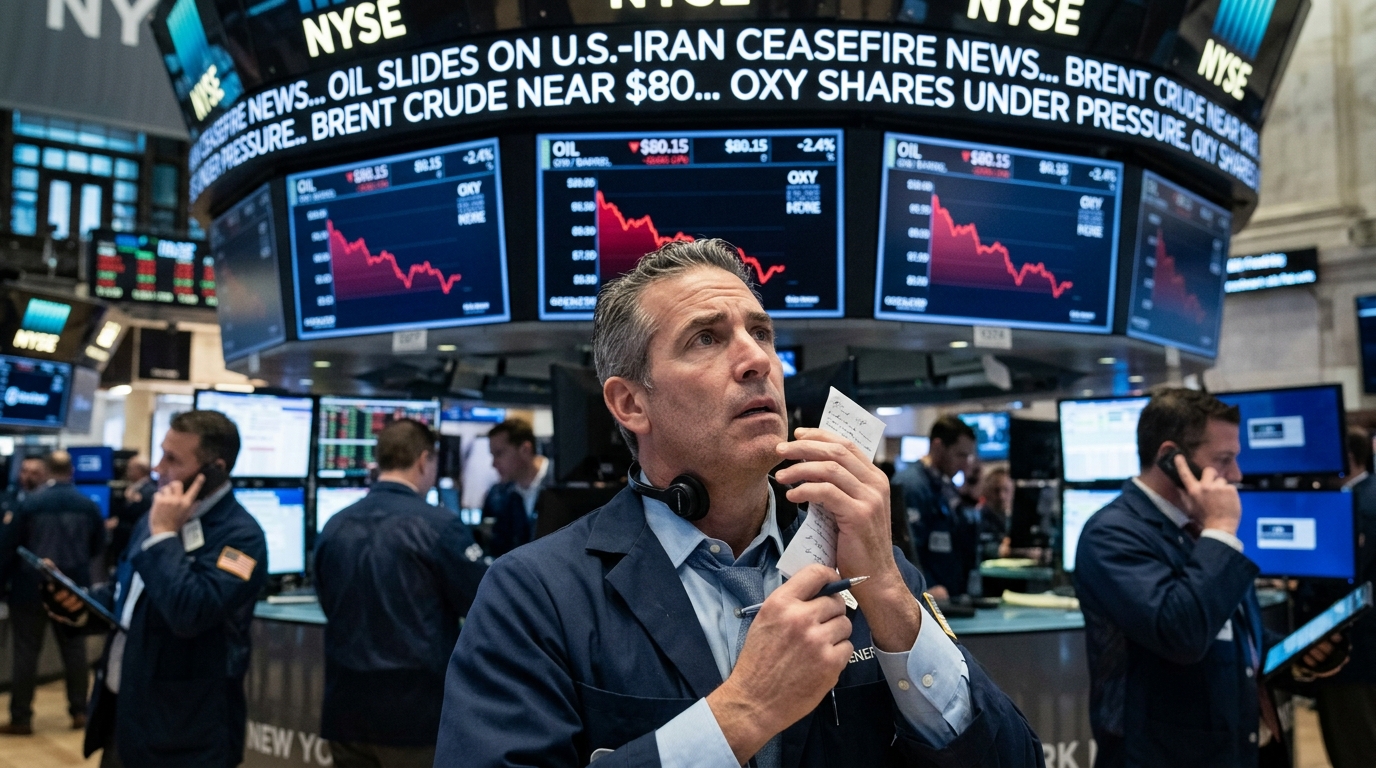
Featured: OXY slides as crude cools on U.S.-Iran ceasefire news
Below is an important message from one of our highly valued sponsors. Please read it carefully as they have some special information to share with you.
Dear reader,
President Trump has signed more than 225 executive orders since he took office.
Most investors don’t read them.
I have.
And Executive Order #14153 clearly outlines what I believe are his intentions to unleash the largest mineral reserve in the country.
According to my research, I estimate it contains up to $2.7 trillion in gold, silver, copper, and other precious elements that could:
- Build 12,500 AI data centers
- Power 24 million tomahawk missiles
- Rebuild America’s broken electric grid – 25 times over
- Construct 3 million high-performance jet engines for the Air Force and Navy
- And repair nearly every major bridge, skyscraper and pipeline across the country
The best part?
A single company – trading for just $2 per share – holds 100% of the rights to this asset.
I believe this could truly be one of the most asymmetric investing setups in history.
If you’d like to take advantage of it before the President makes his next move…
You need to act before June 30.
That’s when a landmark policy decision could reprice this $2 stock, overnight.
Shares could quickly soar to $20 or more over the next year
And I think that’s just the start.
This opportunity is so explosive, it’s possible shares could skyrocket 50-times or more by the end of Trump’s term.
But – time’s running out.
Go here to get the full details before this stock soars.
Regards,
Jim Rickards
OXY slides as crude cools on U.S.-Iran ceasefire news
Occidental Petroleum (OXY) is getting hit for a simple reason: when oil drops quickly, the market immediately starts shaving assumptions for upstream cash flow. Not next quarter. Not next year. Immediately.
Over the past 24 hours, the catalyst has been geopolitical, not company specific. A tentative U.S.-Iran deal to extend a ceasefire and move toward reopening the Strait of Hormuz has reduced the risk premium that built into crude during the conflict. The pressure valve is shipping access, and the market traded it that way.
One quick aside that matters: energy stocks can fall even when oil is still “high” in absolute terms. They do not need $60 oil to wobble. They just need investors to believe next month’s realized prices might be lower than last month’s.
What actually happened in crude
Early Monday, Brent was reported around $83 per barrel and U.S. benchmark WTI around $80, down roughly $4 to $5 on the day. That is a meaningful move in one session, and it lines up with the ceasefire and shipping headlines.
That also means one detail in the original summary needs tightening: crude was not broadly “below $80.” WTI hovered around $80, while Brent stayed above it in the reporting we have as of June 15, 2026.
Why OXY reacts so hard
OXY is a high beta expression of oil prices. When crude falls 4% to 5% in a day, it is normal to see producers trade worse than the commodity because investors start to pressure test margins, reinvestment rates, and buyback capacity.
And yes, “margin compression” is the right phrase here, but keep it grounded. Lower realized prices flow through revenue quickly, while many operating and development costs do not fall at the same speed. That spread is what equity holders are staring at.
AI’s Heat Problem Is Growing
Everyone is talking about AI.
Few are talking about the heat.
As data centers grow larger and more powerful, keeping them cool is becoming one of the industry’s biggest challenges.
That’s where one under-$2 graphene company comes in.
Instead of building AI itself, it’s focused on helping systems run more efficiently by reducing heat and energy loss.
The market hasn’t paid much attention yet.
But as AI infrastructure expands, that could change quickly.
Company fundamentals: expectations vs reality
The near term irony is that OXY’s last reported quarter was not weak on earnings per share. For Q1 2026 (reported May 5, 2026), OXY delivered EPS of $1.06 versus a consensus estimate around $0.60. Revenue, however, was softer, reported around $5.11 billion with year over year decline cited near 11% in at least one earnings recap.
So the stock is not selling off because the last quarter “missed.” It is selling off because the market is changing what it thinks the next few quarters might look like if crude stays closer to $80 than $90.
Options: what the market is paying for right now
Options pricing is reflecting elevated uncertainty, but not panic. One data point: OXY’s 30 day implied volatility mean was recently cited around 0.39 (about 39%) for the week of June 9.
Depending on your data source, “where that sits” versus the past year varies. Some services show it closer to the middle of the one year range, while others suggest it is meaningfully higher than average. The important practical takeaway is simpler: premiums are not cheap, but they are also not pricing a once a decade shock anymore now that the shipping headline risk has cooled.
Defined risk trade frameworks (templates)
Bullish, but cautious: If you believe crude stabilizes near $80 to $85 and OXY’s selloff is more emotion than math, a defined risk approach is a call spread several weeks out, targeting a bounce without paying for unlimited upside.
Bearish continuation: If you think the ceasefire holds, shipping normalizes, and crude keeps drifting lower, a put spread can express downside while capping risk and avoiding the cost of outright long puts.
Neutral, uncertainty stays high: If you think price swings continue but direction is unclear, consider defined risk premium selling structures (like iron condors) only if you are comfortable with assignment mechanics and position sizing. The key is to keep width and risk small enough that a single headline day does not dominate the month.
What I am watching next
- Confirmation that shipping through the Strait of Hormuz actually resumes as described, not just in statements.
- WTI holding the $80 area versus slipping into the mid $70s.
- How OXY trades relative to broader energy peers over the next two sessions. If OXY underperforms even on flat crude, that is a sentiment tell.
If you want one clean way to frame it: this is not about whether OXY is a “good company.” It is about whether the market can get comfortable with cash flow at today’s oil price, not last month’s.
Worth a look: pull up OXY next to WTI and ask one question. Did the stock move more than the commodity, and if so, why did traders feel they needed extra room for error?