July 24, 2026
The Tariff You’re Actually Paying
Featured: The Tariff You’re Actually Paying
1.5M Users and NASDAQ Ticker Reserved
When Google, Meta, and Microsoft all partner with the same pre-IPO startup, investors pay attention.
But that’s not the only reason over 9,500 pre-IPO retail investors are backing Immersed.
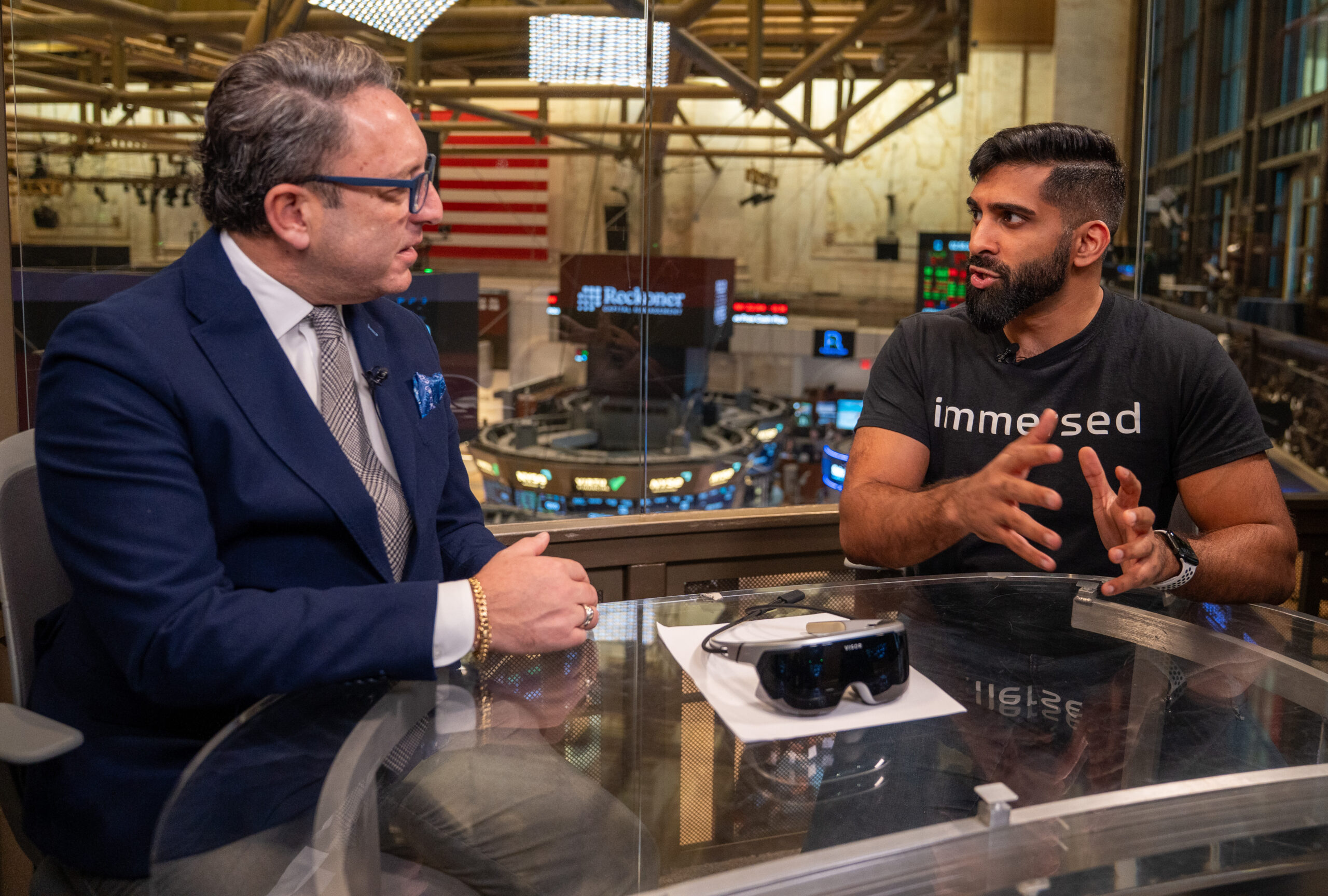
This company is changing the game in AR/VR, developing the Meta Quest store’s most popular productivity app. 1.5 million people already use it, many up to 60 hours a week.
Their soon-to-be-released Visor headset has 2M more pixels than Apple’s Vision Pro for 70% less cost and weight. No wonder they’re projecting $71M in sales.
While their NASDAQ ticker $IMRS is reserved, you have an opportunity to invest pre-IPO in Immersed right now.
The Tariff You’re Actually Paying
The clocks on both sides of the trade ticked down to the same moment.
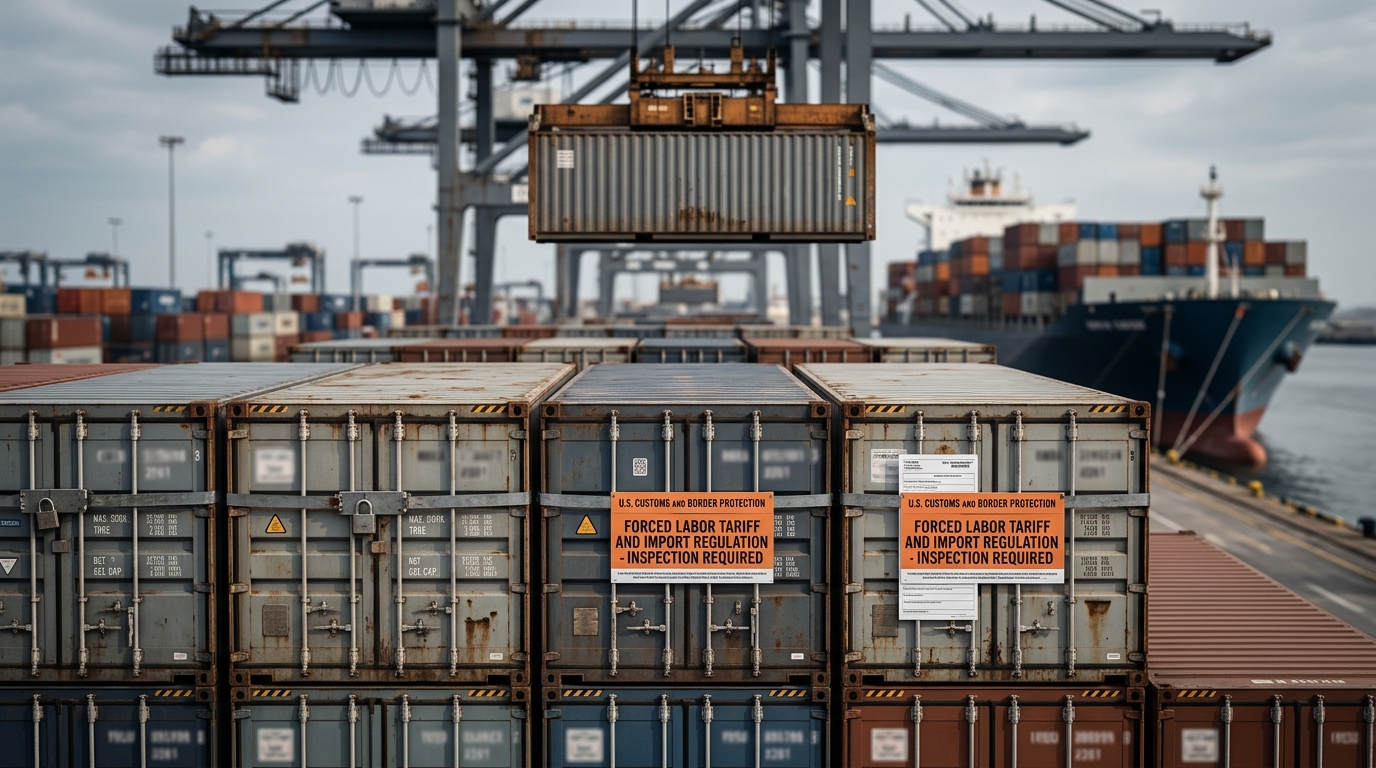
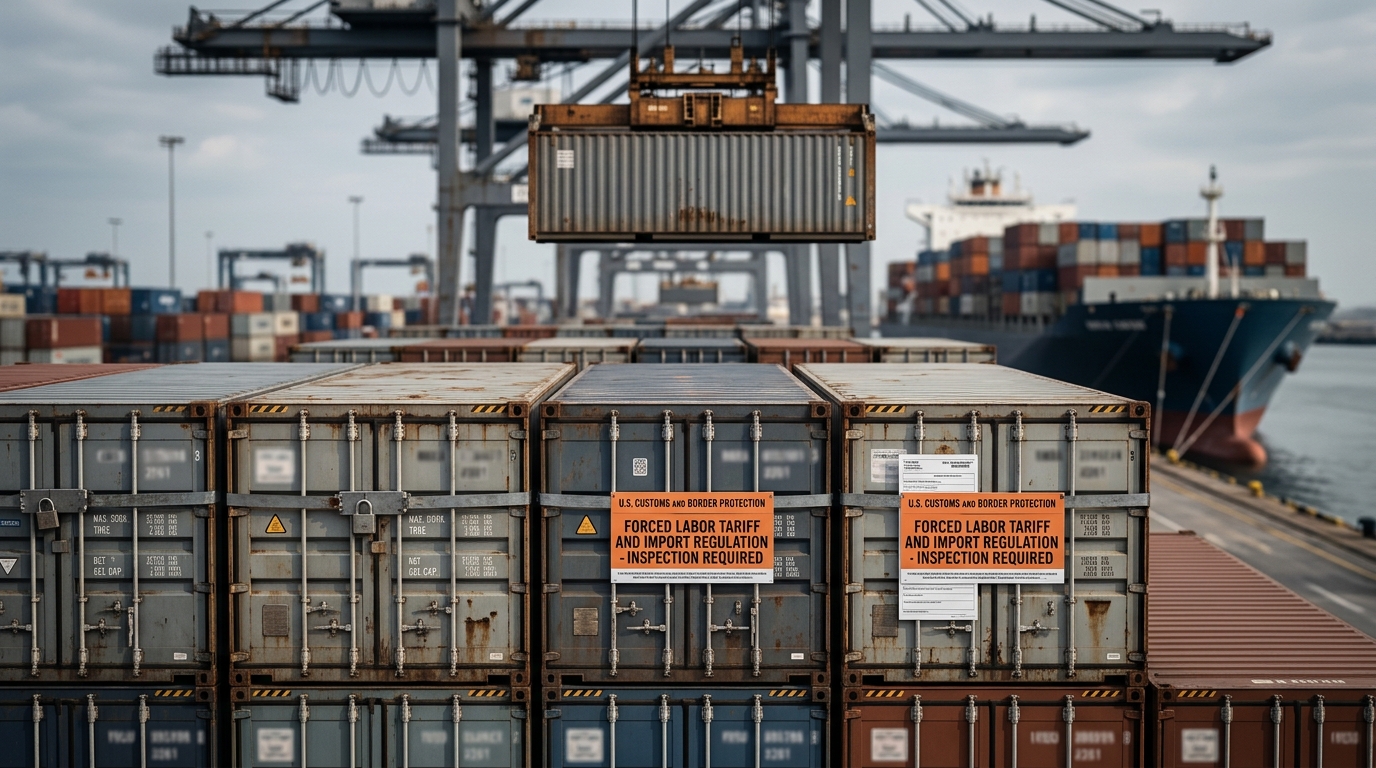
At 12:01 a.m. Eastern Time on July 24, 2026, the stopgap 10% global tariff imposed under Section 122 of the Trade Act expired, right on schedule after its 150-day statutory limit. And at that same moment, a new set of duties arrived to replace it. Fresh Section 301 tariffs of 10% to 12.5% on imports from 60 trading partners, covering 99.4% of all U.S. imports, took effect. The justification: those 60 economies had failed to impose and effectively enforce a prohibition on goods made with forced labor.
The timing was not accidental. Nothing in this trade cycle has been.
How We Got Here
Step back a few months. On February 20, 2026, the U.S. Supreme Court struck down the administration’s broad “reciprocal” tariff regime, ruling in Learning Resources, Inc. v. Trump that the International Emergency Economic Powers Act does not authorize the president to impose sweeping duties on imports from every country in the world. That was a significant legal setback. Within weeks, the USTR launched two sets of Section 301 investigations covering, by design, almost the entirety of U.S. trade. One investigation was built around excess industrial capacity claims. The other, the one that matters today, was built around forced labor enforcement failures.
The forced labor investigation was initiated on March 12, 2026. The USTR received over 1,600 written public comments, held public hearings from July 7 through July 9 with more than 100 witnesses, and then announced the final tariff action on July 23. The next morning, the duties went live. Countries that had committed to enforce a forced labor import prohibition face a 10% rate. Canada, Mexico, the UK, and India are in that group. Countries that had not made that commitment face 12.5%. China, Japan, the EU, South Korea, Switzerland, and Taiwan are in that bucket, among others.
Worth noting: these new Section 301 tariffs generally stack on top of existing duties. For China, that means the forced labor levy piles onto the separate Section 301 tariffs already in place from the first Trump term. The cumulative rate for certain Chinese goods is now materially higher than the headline 12.5% number suggests.
No. 1 Stock to Buy for THIS MONDAY
Heads up: Tim Bohen’s new algorithm just uncovered a dirt-cheap stock that could DOUBLE or MORE this coming Monday. This powerful algo has already identified Monday moves of 149%, 190%, and even a whopping 536%…
Click here to see how to get positioned ahead of this Monday’s setup!
The Reaction From the Other Side
Trading partners were not shy about pushing back. Brazil called it outright manipulation, accusing the USTR of using a human rights issue to obscure a protectionist objective that had no legitimate legal foundation under domestic law. Canada’s prime minister threatened reciprocal action. China called it an unreasonable trade war. Mexico’s economy minister, notably, took a different view: he expected no net change in the effective tariff Mexico faces, because the new duty simply replaces what was already in place.
The EU, Japan, and Australia were furious for a specific reason. All three have meaningful domestic labor protections and, in some cases, active forced labor enforcement frameworks of their own. The EU has already passed a forced labor import regulation scheduled to take full effect in December 2027. Australia has modern slavery legislation that requires large businesses to report supply chain risks. Yet both landed in the 12.5% tier alongside economies with far weaker records on the issue. The framing did not hold up to that comparison, and trading partners were quick to say so publicly.
Brazil was the most aggressive, announcing plans to pursue WTO action. The Liberty Justice Center filed the first U.S. legal challenge against the new Section 301 tariffs the same day they took effect, arguing the action is unlawfully overbroad and that the administration failed to explain why near-uniform duties apply across 60 economies with materially different enforcement records and trade profiles.
Elon’s Latest Take-Over: The U.S. Dollar?
Elon Musk is on the brink of his biggest launch to date. It has nothing to do with satellites… or cars… or even AI. And one analyst close to the story says – it could dwarf all his innovations, combined.
Is This Actually Durable?
Here is the part that matters most for long-term investors: is this regime built to last?
Section 301 has a track record that the tools used before it simply do not. On June 15, 2026, the U.S. Supreme Court declined to hear an appeal from HMTX Industries challenging the executive branch’s authority to modify existing Section 301 duties on China. The Court’s refusal to hear the case left lower court rulings upholding those tariffs in place, effectively ending years of litigation. The first Trump administration used the same statute to impose 25% tariffs on roughly $250 billion worth of Chinese imports, and those duties survived court challenges across two administrations.
That does not mean the new forced labor tariffs are bulletproof. The Liberty Justice Center lawsuit filed today argues the action is too broad to meet Section 301’s targeted, country-specific remedial standard. Legal experts note future courts could challenge whether the administration adequately proved that foreign enforcement failures caused real harm to the U.S. economy, or whether uniform duties are an appropriate remedy for what are clearly non-uniform situations across 60 different economies.
But here is the key point investors should anchor to: Section 301, by statute, requires a formal investigation and a public comment period before tariffs can be imposed. That process creates procedural legitimacy that Section 122 and IEEPA did not have. It also means the administration cannot easily unwind these duties on a whim. By statute, Section 301 tariffs expire after four years unless an interested party requests continuation. For businesses planning capital allocation decisions over a 3 to 5 year horizon, that durability is meaningful. These tariffs may not be permanent, but they are far less fragile than what came before.
What The Market Is Missing
Bond yields edged higher on Friday morning as the new tariffs added to inflation risk. Financial markets, however, reacted with notable restraint, partly because attention was pulled toward the Middle East conflict and ongoing tech earnings volatility. The market’s muted reaction does not mean the economic consequences are muted. It means they are deferred.
Who pays? U.S. importers pay the duties when goods cross the border. The cost burden then travels through the supply chain in one of two directions: it gets absorbed into compressed margins, or it gets passed to customers as higher prices. Companies with genuine pricing power handle that decision from a position of strength. Companies without it face a slow margin squeeze that shows up in earnings over the next two to four quarters.
The sectors most exposed right now are those with deep global sourcing dependencies and thin margins: apparel and textiles, consumer electronics assembly, automotive parts importers, and retail brands that have not yet meaningfully onshored their supply chains. The sectors that gain a relative cost advantage are domestic manufacturers competing against imports, steel and aluminum producers already protected by Section 232 duties, and any business whose production footprint is substantially located in the U.S. or in a country whose tariff rate is lower than its competitors.
Also worth watching: the USTR has a parallel Section 301 investigation underway into excess industrial capacity across 16 major trading partners. Those findings have not yet been released. If a second round of tariffs follows on top of today’s forced labor duties, the cumulative cost effect across exposed industries will be substantially larger than what any single tariff rate currently implies.
The Cheap Investor’s Framework
Tariff cycles produce two kinds of mispricings. The first kind hits guilty companies that deserve the pain: businesses whose margins were entirely dependent on cheap offshore sourcing, with no competitive moat and no ability to adapt. Those are not opportunities. Those are value traps wearing the costume of a beaten-down stock.
The second kind hits quality businesses caught in the same sector-wide selloff as the weak ones. Their fundamentals are intact. Their competitive advantages are structural. Their pricing power is real. And the market, being efficient at pattern recognition but poor at discrimination, has sold them alongside everything else in the category.
That second category is where patient capital belongs.
The questions to ask are not complicated, but they require discipline to ask honestly. Does the business have the kind of competitive position that allows it to pass cost increases to customers without meaningful volume loss? Is its supply chain exposure concentrated in the highest-tariff tier, or is there geographic flexibility that management is already exercising? Is the balance sheet strong enough to absorb a period of margin compression without impairing the long-term earnings power of the business? And critically: is the market treating this as a temporary headwind or a permanent impairment?
The distinction between those two outcomes is where the opportunity lives. Temporary headwinds create discounts. Permanent impairments are just losses wearing a value investor’s hat.
Five Things Worth Watching
- The Liberty Justice Center lawsuit. Filed today. The same group that overturned the IEEPA tariffs is now challenging Section 301’s scope. Their argument: the statute is a targeted remedy, not a blanket taxing authority. Watch the Court of International Trade for early rulings. If they get traction, parts of the tariff regime could be stayed during litigation.
- Canada’s response. Prime Minister Carney threatened reciprocal action. Canadian retaliation would land hardest on U.S. agricultural exports. Any escalation there creates a secondary wave of sector-specific pain that the market has not yet priced in.
- The EU’s timeline. The EU is building its own forced labor import ban, effective December 2027. Countries that move toward compliance can shift from the 12.5% tier to the 10% tier. That tariff rate reduction is a negotiating chip. Watch for bilateral talks that produce commitments in exchange for rate adjustments.
- The industrial capacity probe. The USTR’s second Section 301 investigation into excess capacity in 16 economies is still pending. If those findings produce additional tariffs, the stack of cumulative duties on goods from major trading partners becomes a different and larger problem than today’s numbers suggest.
- Q3 earnings guidance. Companies reporting over the next six weeks will be the first to give quantified guidance on tariff exposure. The spread between companies that can absorb the cost and those that cannot will become visible fast. That spread creates actionable information for investors who have done the homework in advance.
The forced labor issue is not manufactured. The International Labour Organization estimated as recently as 2022 that roughly 28 million people globally were in forced labor situations, with a meaningful share in tradable goods industries. The Uyghur Forced Labor Prevention Act, signed in 2021 and in force since June 2022, has been blocking Xinjiang-linked shipments for years. That enforcement is real, targeted, and legally grounded.
The problem today is that bundling Australia, the EU, Canada, and Japan into the same enforcement failure category as state-directed forced labor programs stretches the moral framing past what the facts support. And the trading partners know it. That diplomatic friction has a cost, even if it does not show up in a tariff rate.
What matters for patient investors is simpler. These tariffs are more durable than what came before, less durable than permanent law, and structurally uncertain enough that businesses dependent on tariff stability for their investment thesis are operating on shaky ground. Businesses whose competitive position is independent of any particular trade regime are not.
That distinction has always been the one worth making. The market’s current reaction just happens to be offering a window to make it at a discount.
Keep hunting.
OTR