
Editor’s Note: We’re delighted to bring you the latest stock pick from our colleague, Wall Street legend Marc Chaikin. You may recognize Chaikin’s name from frequent appearances on CNBC, Bloomberg or Fox Business. His client list has included billionaires such as Paul Tudor Jones, Steve Cohen, and George Soros. His Power Gauge system flashed bullish on Nvidia right before it rose 50,001%. And it just flashed bullish on another off-the-radar AI stock poised to trigger a $248 trillion “White Swan” event as soon as October 20. See below for Marc’s research and free recommendation.
Dear Reader,
I’ve uncovered the single best AI stock in the world.
And it could explode in value on or before October 20.
That’s the date I anticipate a major announcement.
It relates to a brand-new technology this company just launched.
A technology so powerful…
It could speed up AI breakthroughs 360 times over.
Breakthroughs in medicine, energy, quantum computing and AI itself…
Breakthroughs that were five years away…
Could come in just FIVE DAYS once this technology launches.
I’m talking about something I call AI “micro clusters.”
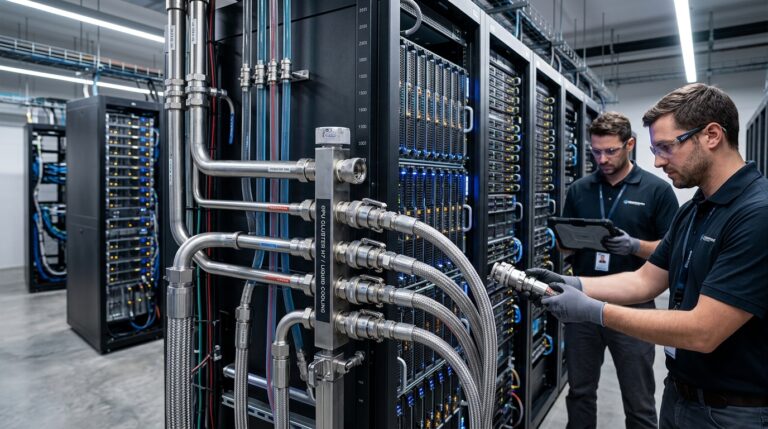
These are clusters of AI compute that will soon replace the massive data centers blotting the American landscape right now.
Micro cluster technology uses 99% less energy than data centers.
It takes up 99% less real estate.
Yet it’s more than 1 trillion times more powerful than today’s data centers.
Micro clusters are about to trigger this $248 trillion AI “White Swan” event.
Those who understand what’s coming could get very rich.
Those who ignore what’s coming could see their AI portfolios wiped out.
The good news?
One company has engineered the special chips that will power this breakthrough.
The U.S. government is pouring billions into this company’s account ahead of the launch.
And when this story breaks into the mainstream…
I believe billions, even trillions more dollars will flow into this stock.
→ It’s not Nvidia.
→ It’s not Apple.
→ It’s not SpaceX.
It’s an off-the-radar AI play that could explode on or before October 20.
The time to get in is right now.
So, I created this urgent presentation detailing the whole opportunity.
I explain the technology.
I take you “inside” the secretive lab where it’s being finalized.
And I even give you the name and ticker of the company behind the coming technology revolution.
Fair warning: This presentation contains time-sensitive information.
I may have to take it offline as soon as 12 midnight, tonight.
Good investing,
Marc Chaikin
Founder, Chaikin Analytics
P.S. The company I name in this presentation represents the future of AI. Its new technology is about to replace AI data centers when it comes to major AI breakthroughs. And it will, I predict, trigger a $248 TRILLION reboot of the AI markets… and one of the biggest moneymaking opportunities we’ll ever see… about 50 times bigger than the whole AI boom to date, in fact.
Go here for full details, including the company’s name and ticker. And if interested, I urge you to get in on or before October 20, when this company presents its latest findings at a major tech conference in Europe.
Applied Digital Reports Wednesday Into a Borrowing-Cost Shock
Markets don’t care about Applied Digital’s data-center vision this week. They care about who is willing to finance it, and at what cost.
APLD reports fiscal Q1 2027 results after Wednesday’s close, covering the quarter ended August 31, 2026. The timing is genuinely consequential. On October 1, Reuters detailed how Wall Street lenders, including institutions tied to Nvidia’s $500 billion chip-backed financing plan, doubt GPUs can serve as durable long-term collateral. Lenders are questioning Nvidia’s proposal to treat AI chips as collateral over a far longer horizon, while banks typically assume three-to-four-year depreciation terms. In the riskier parts of the US debt market, spreads on CCC-rated bonds jumped above 1,000 basis points over Treasuries for the first time since the regional banking crisis in 2023.
Applied Digital’s model depends entirely on the financing conditions that just deteriorated.
The Numbers Going In
Applied Digital will release Q1 2027 results after the market closes Wednesday, October 7. Analysts expect earnings of approximately -$0.30 per share and revenue of about $116.3 million, though published revenue estimates vary. Compare that to the prior quarter: APLD posted adjusted net income of $0.04 per diluted share on revenue of $258.7 million. That quarter’s massive revenue outperformance set a high bar, but it also obscured the structural issue: the company is still burning cash at scale while leveraging against future lease receipts.
As of FY2026 year-end (May 31, 2026), APLD carried approximately $5.0 billion in debt and $4.2 billion in cash, cash equivalents, and restricted cash, a balance sheet built around long-term hyperscale data center leases. The debt stack includes 9.25% senior secured notes due 2030 and 6.75% senior secured notes due 2031. The anchor on the other side: approximately $36 billion in contracted base-term lease revenue across five AI Factory campuses, or about $86 billion including renewal options.
Why the Reaction May Surprise Either Direction
This is not about whether Applied Digital beats the revenue estimate. It is about guidance, lease conversion pace, and what management says about refinancing cost in a market where lenders are actively debating the usable life and residual value of GPU-backed collateral.
Applied Digital remains highly concentrated by customer, with a large share of contracted capacity tied to a single high investment-grade hyperscaler. If Wednesday’s call includes any pause in that customer’s ramp, or any signal that project-level financing terms have tightened, the stock has significant room to move lower. APLD’s 52-week range spans $19.01 to $50.73, meaning the current price near $25 sits closer to the floor than the ceiling of what this market has priced in over the past year.
Options Market Analysis
Implied volatility stands at approximately 115%, with an IV rank of 52% and an IV percentile of 72%. That means options are expensive relative to most of the past year, and the market is pricing in a wide move. The put/call ratio has risen to 0.67, above the typical 0.45 level, signaling increased demand for downside protection. The options market implies an expected move of approximately plus or minus 12.3% through expiration. On a $25 stock, that translates to a range of roughly $22 to $28 heading into Wednesday’s close.
With IV rank above 50 and directional flow tilted bearish, outright long premium strategies face meaningful decay risk if the stock stays rangebound. Selling premium into this event is equally hazardous given the binary nature of the collateral and guidance questions. The asymmetry favors defined-risk structures.
Structured Trade Framework
Bull case: If you believe Applied Digital’s contracted backlog insulates it from near-term financing stress and the Q1 revenue print confirms a sequential ramp toward the FY2027 consensus of about $830 million, a defined-risk long structure targeting the $28 to $30 range captures the upside without naked exposure to a guidance cut. A call spread using the October expiry captures the expected-move range while capping cost.
Bear case: For traders expecting management to acknowledge tighter project financing or slower construction timelines, a put spread below $22 captures a move toward the 52-week low with defined maximum loss. Given the put/call skew already elevated, outright put purchases carry elevated premium cost; spreads are the more capital-efficient expression.
Neutral/income case: A short strangle or iron condor centered on the current price exploits IV compression after the event. This structure profits if the stock settles inside the expected move. The risk: APLD’s history includes quarter-over-quarter revenue swings exceeding 100%, and the credit backdrop could produce a reaction at the outer edges of that range.
Risk Analysis and Forward Outlook
The core risk heading into Wednesday is not operational. AI chip financing sits at the center of a potential mismatch between Nvidia’s collateral claims and a more cautious Wall Street, with bankers and asset managers wanting more guarantees before backing chip-backed loans. Applied Digital’s entire construction pipeline is downstream of that debate. If lenders demand shorter depreciation schedules or higher residual guarantees on GPU-backed loans, the cost of financing APLD’s next campus rises materially, regardless of what the lease revenue looks like.
Wednesday’s call will be closely watched for construction and energization milestones across Polaris Forge 1, 2, and 3, and Delta Forge 1. Guidance on Polaris Forge 3, the 300 MW lease with a U.S. high investment-grade hyperscaler valued at approximately $7.5 billion in base-term contracted revenue, carries the most weight. Any delay signals financing stress before the company says so explicitly.
Action Checklist
- Confirm Q1 revenue against the current analyst range and compare to the prior quarter’s $258.7M, noting the sequential step-down reflects campus energization timing, not necessarily demand deterioration.
- Monitor management commentary on refinancing cost and lender terms for Polaris Forge 3 and Delta Forge 1 specifically.
- Track the put/call ratio and IV in the session following earnings for post-event positioning signals.
- For defined-risk structures, size to the expected move of plus or minus 12.3%, not to maximum conviction.
- Watch credit spreads through the week: further widening from current levels adds direct pressure to APLD’s next financing window.