The Central Election Commission’s count showed 7,434,677 yes votes against 4,557,768 no votes on a referendum that asked voters whether they support using nuclear power to boost the economy and thereby abolishing the “nuclear-free homeland” energy policy. The vote was held Saturday in Taiwan. By Sunday morning, Beijing had its own answer.
Market Snapshot: What Traders Are Walking Into
TSM closed Friday at $353.34. The stock is already well off its highs: its 52-week range spans $275.08 to $487.47. Taiwan’s markets are closed Sunday, so Monday’s open will be the first read on how local investors price the vote.
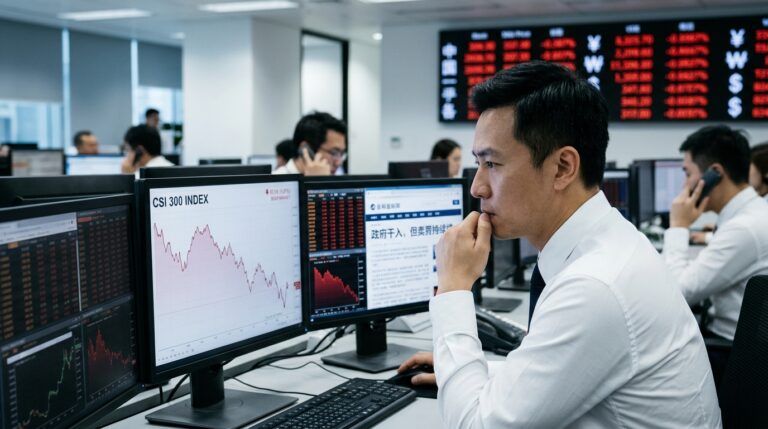
Reuters reported Sunday that China warned that “reunification” cannot be stopped, responding to Taiwan’s local elections where the ruling DPP doubled the number of cities and counties it controls, though it lost the Taipei mayoral vote. Reuters also reported that Beijing said it would continue to “firmly crack down on Taiwan independence separatist forces, oppose external interference” and “advance the great cause of national reunification.” China also sent warplanes and warships around Taiwan on Friday, according to Taiwan’s defense ministry and Reuters.
Stocks in Focus
- TSM (TSMC): The yes vote lowers the tail risk that Taiwan’s power ceiling caps TSMC’s leading-edge ramp later this decade and into the 2030s. That is a long-dated positive. The near-term pressure is cross-strait: Beijing’s Sunday statement adds geopolitical risk premium heading into Monday. Watch whether selling extends through $344, the bottom of Friday’s intraday range.
- CCJ (Cameco): Shares rose about 4.4% on November 27. Recent coverage has centered on temporary unplanned operational disruptions at Key Lake and McArthur River and on Westinghouse optionality. Taiwan adds another demand signal to a thesis already supported by 39 countries pledging to triple nuclear capacity by 2050.
- UEC (Uranium Energy): In Q2 FY2026, UEC reported sales of 200,000 pounds at $101 per pound, well above the quarterly average spot price of $80.76 per pound. An unhedged book means every incremental demand signal matters, but Taiwan is a policy headline first and a fuel-order headline later.
- LEU (Centrus Energy): LEU is not the only uranium enricher operating in the U.S. and it is not currently the only U.S.-based enrichment operator. Centrus has reported backlog extending to 2040, with backlog around $3.9 billion as of March 31, 2026 and $7.0 billion as of September 30, 2026. A Taiwan restart adds to the multi-year case for Western enrichment capacity, but it does not change order books overnight.
Sector Watch: Nuclear vs. Semis
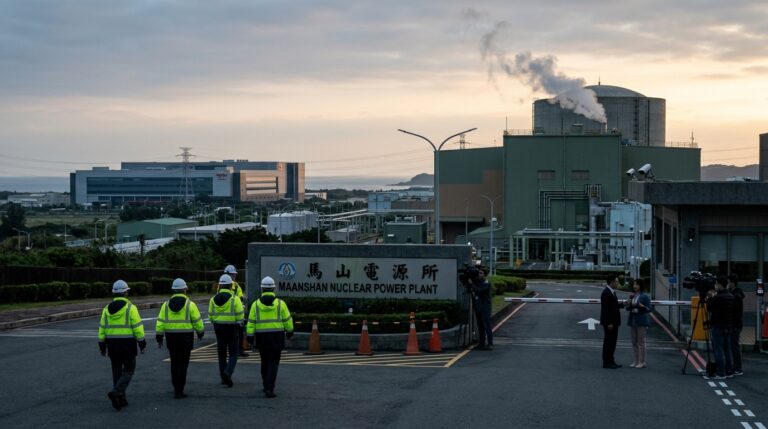
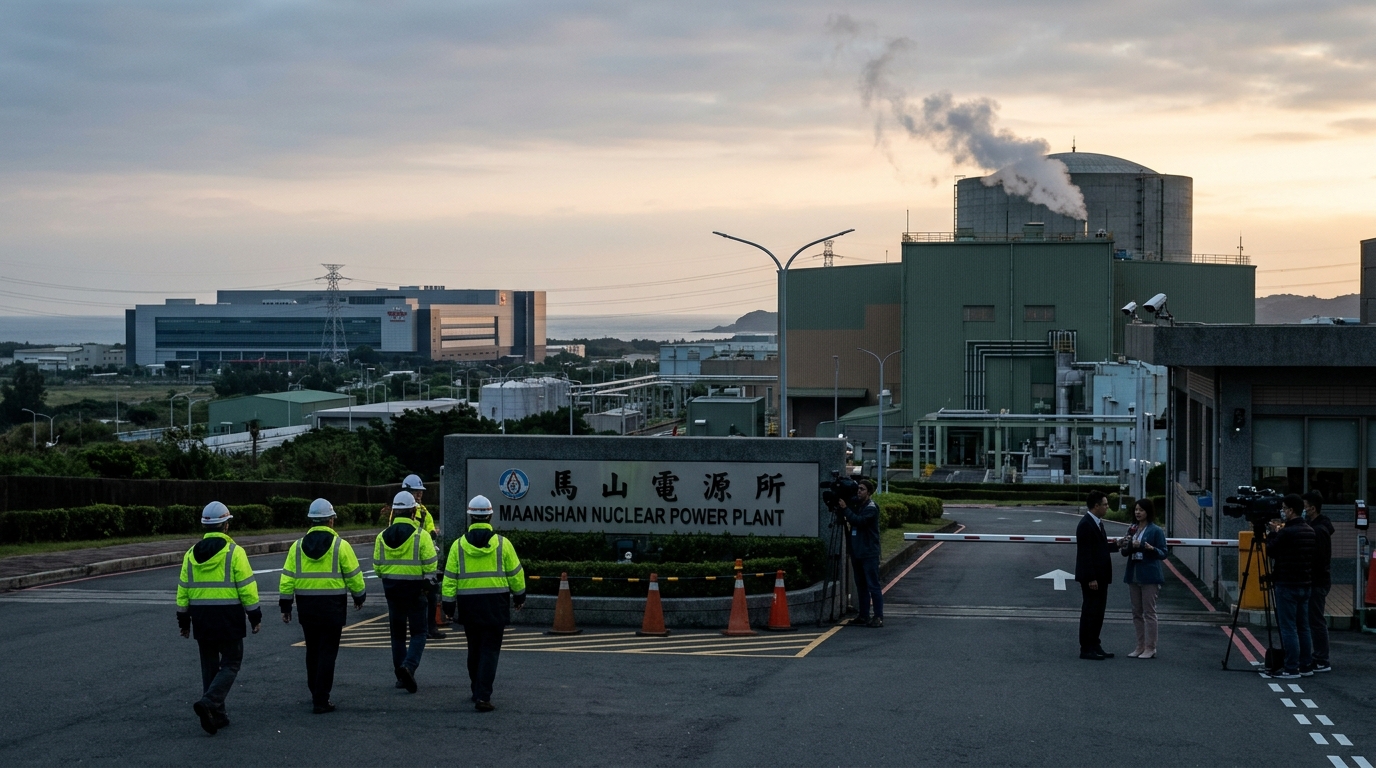
In March 2026, Taipower submitted a restart plan and licence renewal application for Maanshan to the Nuclear Safety Commission. The regulator completed its review of the restart plan in September 2026. Saturday’s referendum gives that process democratic cover. Supporters estimate reactors could return within about 18 months to three years; opponents project five to 10 years. That spread matters: uranium names can price the bull case immediately, but the actual fuel purchase cycle is years away.
The semiconductor trade is more complicated. The KMT framed the referendum as a direct link to Taiwan’s economy and the AI and semiconductor industries, arguing the party wants to ensure a stable power supply to meet their electricity demands. The vote has no direct effect on Taiwan’s chip output this week. The geopolitical overlay from Beijing’s Sunday statement is the variable that matters most for TSM and Micron on Monday morning.
Catalyst Calendar
- Taiwan markets open Monday: First local reaction to both the referendum result and Beijing’s Sunday statement. Watch the Taiex and TSMC’s Taiwan-listed shares for direction before U.S. pre-market establishes a range.
- Central Election Commission certification: Results remain unofficial until the CEC formally confirms them.
- Taipower regulatory timeline: The Nuclear Safety Commission has completed its review of Maanshan’s restart plan. Next milestones include safety checks, inspections, and a reissued operating licence before any generation resumes.
The Cheat Sheet
- Top Theme: Taiwan has voted to scrap its “nuclear-free homeland” policy; Beijing has responded by escalating reunification language. Both sides of that sentence move markets, in opposite directions.
- Stock to Watch: CCJ. It captures the uranium demand signal without the direct Taiwan geopolitical exposure that weighs on TSM.
- Sector to Watch: Uranium and nuclear services. The catalyst is real, even if the fuel demand is years from materializing.
- Biggest Risk: Beijing’s military posture. China has repeatedly conducted military activity around Taiwan in recent years. Any escalation beyond rhetoric hits TSM, Micron, and the broader semiconductor complex hard and fast.
- Biggest Opportunity: UEC and LEU on a gap-up open, with a disciplined exit plan. The Taiwan demand signal is real but long-dated; the initial move is sentiment, not fundamentals.
- One Thing to Remember: The referendum mandates a policy direction, not a reactor restart. Nuclear names will trade the headline; the actual fuel demand is years away. Sizing matters more than direction.