October 13, 2026
One remark from Singapore hit a market with no marginal buyer, and CXMT offered no floor.
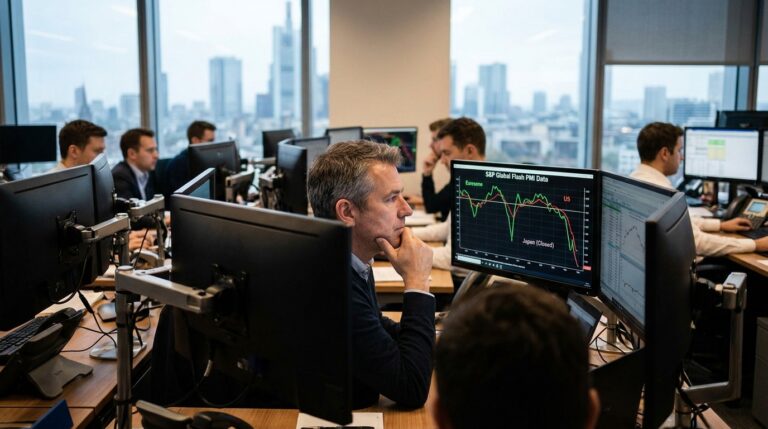
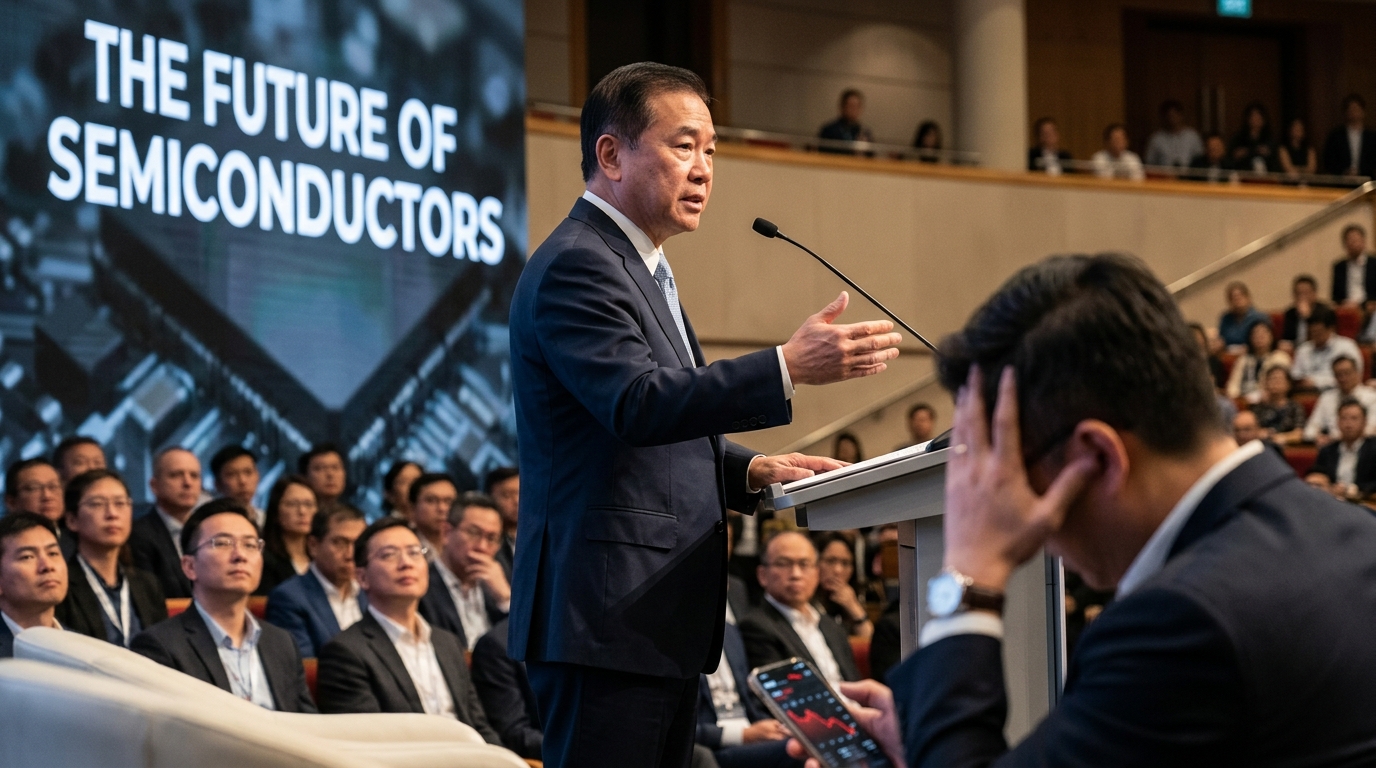
Markets don’t need a reason to fall. They only need permission. On Monday, October 12, Broadcom CEO Hock Tan granted that permission in one sentence spoken at an industry event in Singapore.
AI’s NEXT Magnificent Seven
The Original Magnificent Seven Produced 16,894% Average Returns Over 20 Years.
But the Man Who Called Nvidia at $1.10 Says “AI’s Next Magnificent Seven Could Do It Even Faster.”
Tan told the audience, “A lot of investors have no clue what they are investing in,” adding that they were setting “very extreme expectations” only to discover that AI investing was “almost like they are in a casino.” By Tuesday morning, South Korea’s Kospi had fallen more than 5% on the day, and semiconductor-heavy names led the damage.
This is not about whether Tan is right. He probably is. This is about what a single verbal catalyst does to a market that has already burned through its discretionary buyers.
The Data Behind the Drama
Tan’s remarks came even as Broadcom has laid out a path to approximately $230 billion in AI semiconductor revenue in fiscal 2028, following approximately $115 billion in fiscal 2027, and $58 billion of AI semiconductor revenue guidance for fiscal 2026. These are not hedged numbers. Tan has a documented track record of underestimating his own growth: in late 2024, he pointed to an AI revenue serviceable addressable market of $60 billion to $90 billion for fiscal 2027, a forecast that looked aggressive at the time and has since proven too conservative relative to Broadcom’s latest AI revenue outlook.
Asked what could stop the buildout, Tan answered simply: money. That warning shifts the focus from chip supply to credit, putting AI-linked debt deals and the balance sheets of capital-hungry model developers under closer scrutiny. The timing was pointed: just days earlier, the Wall Street Journal reported that Broadcom is working to arrange more than $50 billion in private financing to pay for the custom AI chip it is building with OpenAI, with Apollo Global Management and Blackstone among the lenders in discussions. The Journal also reported that AI-related borrowing in U.S. leveraged finance markets has surged since early 2025.
The private credit architecture funding AI chip demand is newer and less tested than it appears. Nvidia’s move to mobilize $500 billion in third-party capital through Apollo, Blackstone and others reframes GPUs as collateral — the same financing ecosystem Tan flagged as the buildout’s limiting constraint.
Is the longest-running bull market on record finally running out of steam?
It looks that way. But truthfully? It doesn’t matter.
Because this strange formula gives you a way to study a defined setup during a short morning window… even if the market crashes.
One ticker retirement traders are quietly using every morning.
One short morning window between 9:30 and 10:45 AM.
One approach with entry and exit plans fully defined before you ever place a trade…
Don’t even think about making another trade until you see this free report.
Why Korea Bore the Brunt
The Tan comment alone might have been survivable. Korean stocks took the biggest hit as investors also reacted to reports that Chinese rival CXMT has made progress on a new memory cell architecture that Samsung and SK Hynix are also working on. CXMT reported “key progress” on a new cell architecture to boost memory density and said it plans to roll out a server-memory product based on it by the end of 2026. Together, the two catalysts were not individually survivable.
CXMT’s 4F² claim hit memory leaders hard, but the move was less extreme than some early trading chatter suggested. By Tuesday, October 13, Samsung Electronics was down 7.4% and SK Hynix was down 10.1% in a session that pulled the Kospi down more than 5%.
Critically, some analysts note it remains to be seen whether supply concerns from China will translate into actual earnings deterioration. On CXMT’s next-generation memory, questions around yields, performance, and customer qualification remain unresolved. That distinction matters little in a sentiment-driven selloff with thin marginal buying.
Options Market: IV Elevated, Skew Warning
AVGO options market is pricing elevated uncertainty. However, the specific IV30, IV rank/percentile, and put/call figures in the earlier draft were not verifiable from primary, timestamped options data in the public record as of October 13, 2026. The expected move priced into AVGO options is still large enough to warrant defined-risk frameworks over directional outright positions.
Structured Trade Framework
Bull case. If you believe Tan’s $230 billion 2028 revenue outlook is credible and the CXMT threat is overpriced by the market, a defined-risk structure such as a bull put spread on AVGO below current support offers asymmetric reward relative to the fear premium now embedded in puts. Collect elevated premium while the skew is rich.
Inside the Nuclear Revival Reshaping Energy Markets
Governments worldwide are investing billions to revive a proven energy source. Supply chains are tightening, demand is rising, and select companies stand to benefit. The Nuclear’s Second Act report explains what’s happening next.
Bear case. For traders expecting credit constraints to compress AI capex in 2027, a bear call spread on NVDA, selling near-term upside, captures premium in a range where the stock has shown resistance. The financing risk Tan flagged has not yet appeared in GPU order rates, but the lag could be two to three quarters.
Neutral case. With IV elevated across semiconductors, an iron condor on SOXX, the iShares Semiconductor ETF, captures premium on both sides of a range-bound market while limiting exposure to a single-name binary. The structure profits if the sector consolidates rather than trends sharply in either direction over the next 30 to 45 days.
Risk Analysis and Forward Outlook
The core risk is not that Tan is wrong about demand. For semiconductor stocks, the message is mixed: demand may remain intact, but questions about customer profitability and funding introduce a longer-term risk to forecasts. The private credit mechanism now underwriting portions of AI chip demand, including vendor-financing style structures tied to major buyers, is a structure with limited historical stress-testing at this scale. If one deal resets or one borrower’s revenue disappoints, the contagion path through custom-chip suppliers is direct.
Earnings announcements from ASML and TSMC are scheduled this week: ASML is set to report Wednesday, October 14, 2026, and TSMC is set to report Thursday, October 15, 2026. Those reports will either confirm or complicate the demand picture Tan drew in Singapore.
Action Checklist
- Monitor AVGO implied volatility relative to its 52-week range; if the curve stays elevated, premium-selling conditions in spreads tend to improve.
- Track CXMT’s end-of-2026 server DRAM timeline; a confirmed product release shifts the competitive threat from sentiment to fundamentals.
- Watch for updates on the reported Broadcom/OpenAI financing discussions; delays, resizing, or changes in structure are direct signals on credit appetite for AI capex.
- ASML (Oct. 14) and TSMC (Oct. 15) earnings are the sector’s next hard data point, compare guidance language against Tan’s demand-intact framing.
- For Korea-linked exposure (Samsung ADRs, SK Hynix options proxies), uncertainty over whether the AI upcycle can last into 2028 and beyond appears to be weighing on valuations, size positions accordingly until CXMT’s production claims are verified or refuted.