September 26, 2026
Tuesday’s report isn’t about the beat. It’s about the Q4 guide.
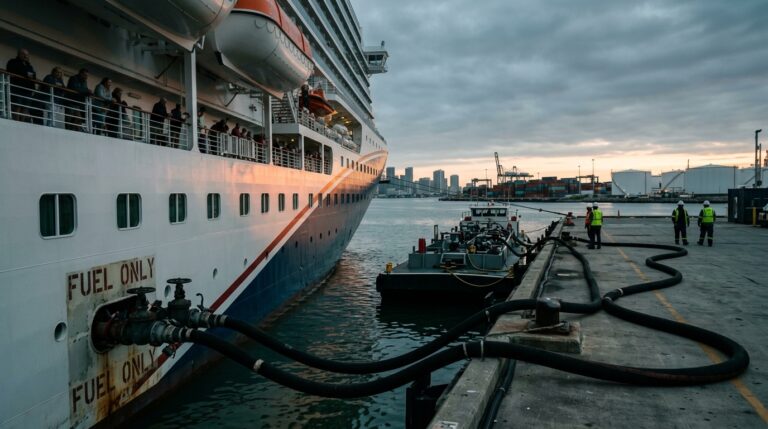
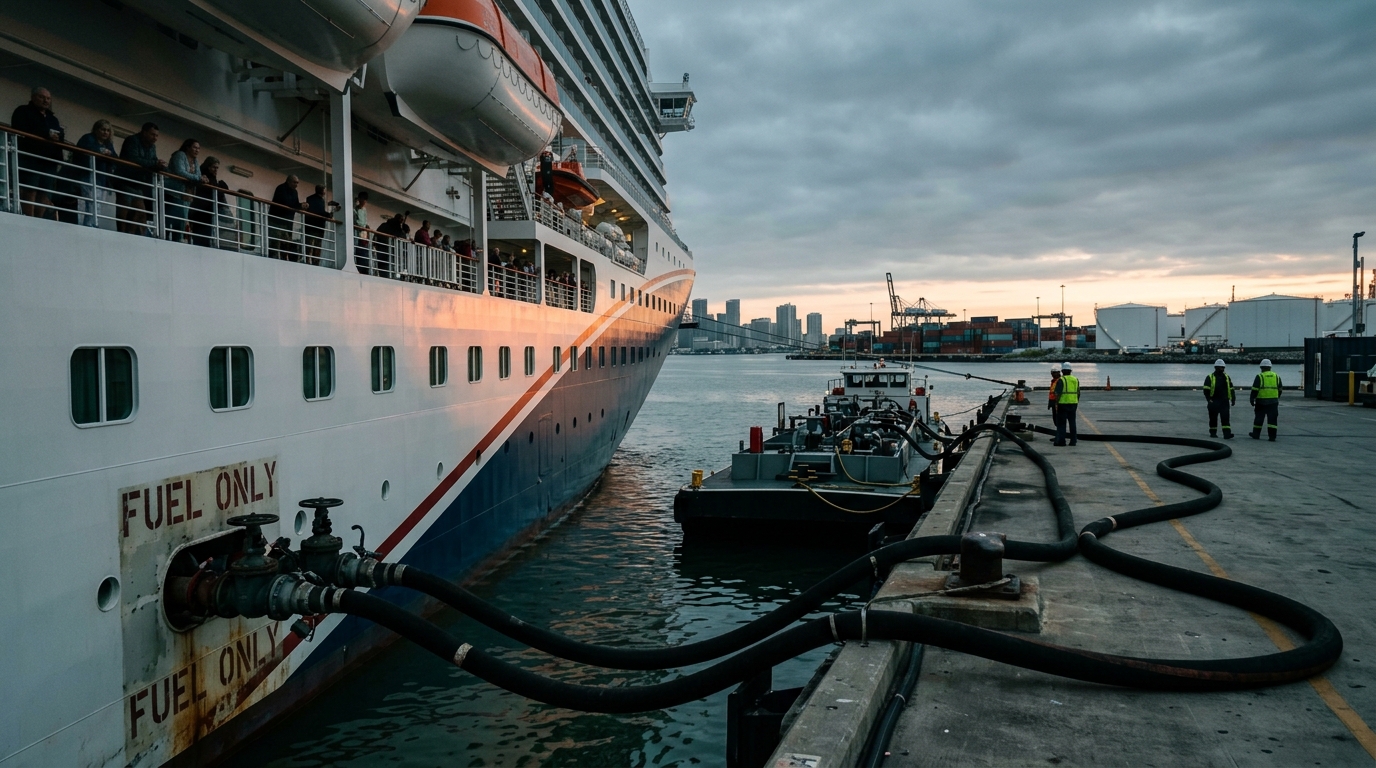
Carnival Corporation (CCL) reports its fiscal third-quarter results before the open on Tuesday, September 29, 2026. The quarter covers peak summer sailing, and the number Wall Street will study hardest is not revenue or EPS. It is the fuel line.
The Department of War Is on a Gold Mine’s Filings
On May 21, 2026, the board of a federal bank voted unanimously to lend nearly $3 billion to build a gold mine on American soil. Congress got 25 days notice. Nobody objected.
Final papers are expected in the second half of this year. The day that ink dries, three things happen at once:
One more detail. The company’s own filings cite “substantial support and partnership from the Department of War,” a phrase we’ve never seen on a gold project. The reason: alongside its gold, the deposit holds a metal China formally banned from export to the United States. The only domestic reserve in the country.
The company is about one fiftieth the size of Newmont.
This is not about whether Carnival beat or missed. It is about whether cruise pricing can absorb a war-inflated bunker cost that has reshaped every forward estimate on the street since June.
What the Numbers Say
Consensus expects about $1.35 per share in earnings, down from $1.43 in the year-ago period, against revenue of $8.4 billion compared to about $8.2 billion reported last year. That revenue figure implies roughly 2% top-line growth, but the EPS decline tells the margin story: costs are rising faster than ticket and onboard revenue combined.
Over the last 30 days, the consensus EPS estimate has been revised down, a contraction that reflects coordinated cuts from nearly every covering firm. But the draft’s specific fuel figures are not supported by what the company has published recently. Carnival’s most recent outlook has pointed investors to fuel sensitivity and price exposure, but the company has not guided a $620 million Q3 fuel bill, and it is not credible to treat a precise $620 million company guide and $640 million bank model as settled facts here. The overage may be modest in isolation, but it compounds into Q4, where the full weight of a sustained Brent rally lands with little buffer.
Why the Stock Fell 27%
The stock’s late-summer drawdown has tracked the market’s renewed focus on fuel exposure, and multiple sell-side desks have framed the story as less about Q3 and more about what higher oil means for Q4 and the forward guide. Brent’s move matters, but pinning the entire six-week decline to a specific percentage change in Brent and tying it to a single “client note” without the underlying document overstates what can be verified in this format.
Download your report before it expires
If you still haven’t downloaded the free Options Landmine Calendar…
…please take a few seconds and download it right now before your download link expires.
It reveals the 4 recurring events that blow up options trades – and how to avoid them with a 5-minute check.
This report costs $29.97 on my website, but it’s free with this backdoor link for a short time:
What can be stated cleanly: Carnival has been widely described by analysts and industry coverage as the only major cruise operator that does not hedge fuel, leaving it more exposed to sudden swings in bunker pricing than peers. That is the mechanical reason the market has treated the recent oil move as an earnings problem, not a headline problem.
Carnival is not alone in absorbing that translation from oil market to income statement. American Airlines made the same calculus explicit at a Morgan Stanley conference, where management put a dollar figure on the damage that left little room for interpretation. how American Airlines quantified its war-inflated fuel exposure for traders is worth reading alongside the CCL setup, because the two cases illustrate how differently hedged and unhedged operators communicate the same underlying cost shock.
Analyst Targets: Cut, But Still Buy
The wall of downgrades is notable for what it did not do: no broad wave of Sell calls. Bank of America and JPMorgan have cut targets while keeping positive ratings, and Goldman Sachs maintained Buy while cutting its target from $35 to $30 on September 17, 2026. The consensus is that Q3 is manageable, Q4 is the real test, and the stock’s existing decline has pre-discounted much of the damage.
The timing of those target cuts is not coincidental — they clustered around a pivotal moment for the oil market itself. OPEC+ was meeting with Brent near $95, and the outcome of that session set the trajectory that sell-side desks were scrambling to model into cruise and airline cost structures. what the OPEC+ September decision meant for XLE, XOM, and energy stock positioning provides the supply-side context behind the analyst revisions hitting CCL in the same window.
Options Market Analysis
The options market is pricing an expected move of roughly 6.5% around the earnings release. With CCL trading near $21.50, that brackets a post-print range of roughly $20.10 to $22.90. However, the draft’s exact 6.47% and $1.41 figures, as well as the specific “average realized one-day move over the past eight earnings events” and a “9.81%” maximum tied to “the December 2025 report,” are too specific to leave standing without a verifiable calculation source. Keep the framing, but treat the precision as approximate.
Likewise, the put-to-call flow number in the draft is not stable enough to assert as a fixed 0.32 in a publication-ready piece without a timestamped data source. What is fair to say: call-heavy flow has shown up at times into this event, which is consistent with the market paying for upside optionality even as the underlying trend is down. Elevated single-stock implied volatility into a known catalyst makes long premium expensive; the expected move is priced in, not free.
5 Little-Known Stocks Behind Today’s Defense Tech Shift
Behind the headlines, a major transformation is underway.
Modern warfare is being driven by AI, autonomous systems, and next generation technology. A handful of lesser known companies are helping power this shift.
This report uncovers five stocks quietly playing a critical role in the future of defense.
Structured Trade Framework
Bull case: For traders expecting Carnival to guide Q4 fuel costs in line or better, a defined-risk structure such as a bull call spread in the October 22/25 strikes limits premium outlay while capturing a bounce toward the expected move ceiling. Barclays has flagged a path where demand holds up and the company can defend its yield posture even with fuel pressure.
Bear case: If full-year 2026 guidance is cut on fuel, a defined-risk put spread targeting the $19 to $20 range prices efficiently given current IV levels. Some analysts have also highlighted that sustained fuel prices could pressure fiscal 2026 earnings power, making a guidance trim the higher-probability downside catalyst.
Neutral case: A short strangle at the $20 put and $24 call, bracketing the implied move, collects premium if the stock absorbs the report without extending the 27% decline. Risk is undefined; use a defined iron condor if capital efficiency matters.
Key Risks
Key areas of investor focus beyond EPS include fuel costs, Caribbean capacity, European demand, close-in yields, and 2027 bookings and pricing. Any downward revision to the fiscal 2026 full-year guide will reset sell-side models across RCL and NCLH as well, widening the sector impact.
Action Checklist
- Watch the Q3 fuel expense figure and management’s fuel commentary. The draft’s specific “$620 million guide” and “$640 million estimate” are not supported by verifiable company guidance here.
- Monitor full-year 2026 EPS guidance revision, which the draft cites as $2.21 after June’s cut from $2.48. Treat those figures as provisional unless they are sourced directly to company guidance or a defined consensus feed.
- Track 2027 booking language and close-in Caribbean yield commentary for RCL and NCLH read-across.
- Options traders: expected move of roughly 6.5% is priced; favor defined-risk structures on either side rather than naked long premium.
- Confirm whether management signals any intention to hedge fuel for 2027, which would be the structural story shift the stock needs.
The hedging question is not unique to cruise lines — it has already played out in real time across the airline sector, where a crude oil drop earlier this year forced a rapid repricing of forward cost assumptions. Watching how carriers with and without hedge books responded to that move offers a template for what a CCL fuel hedge announcement could mean for the stock. how a crude oil decline reshuffled airline sector estimates and hedging calculus is the closest parallel trade in the travel complex.